Disclosure: Some links on this page are affiliate links. Commissions never change our recommendations. Read the full disclosure.
Last updated
Hub overviewStart here
What is camp climate control?
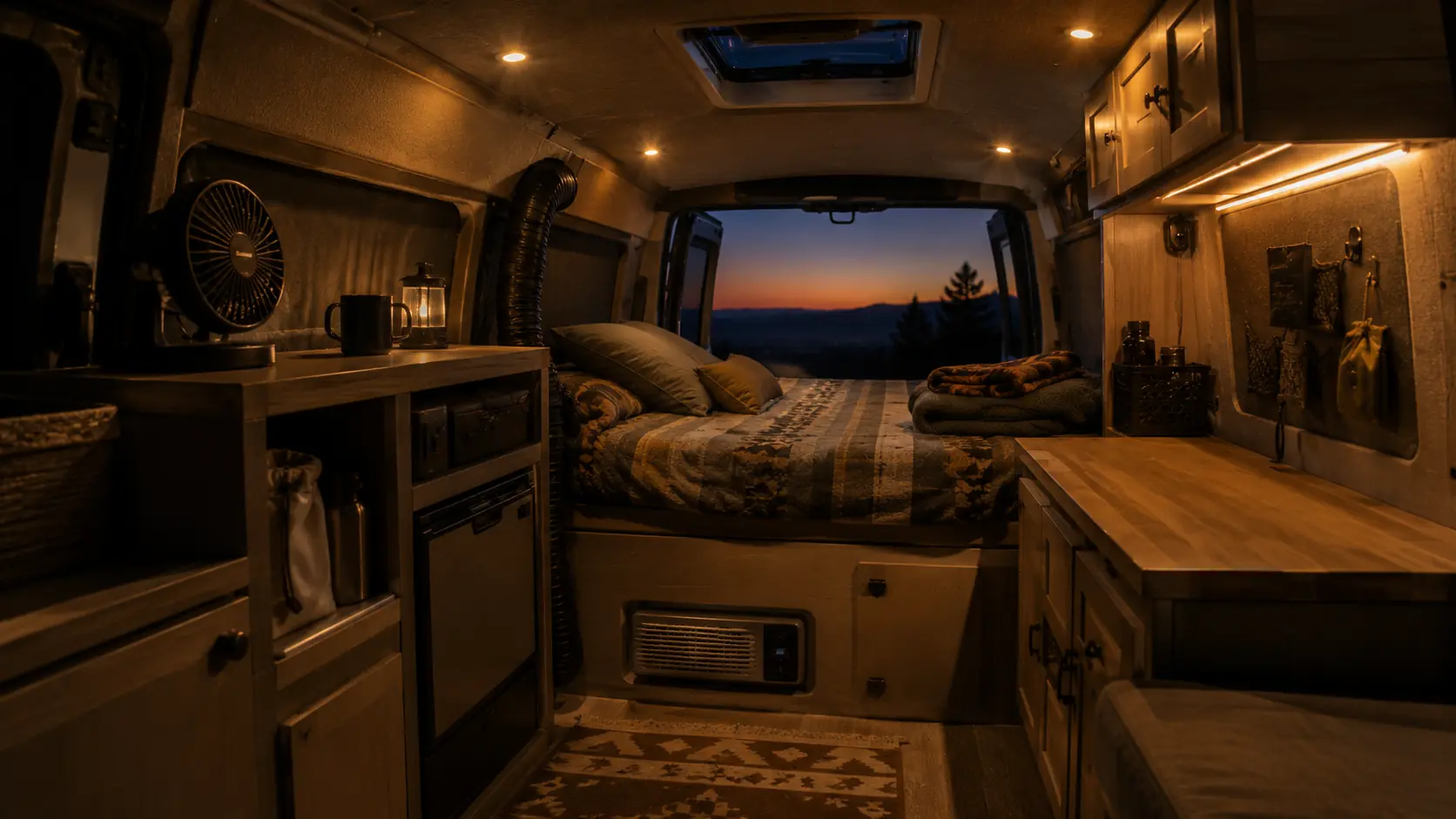
Camp climate control is the full stack that keeps a vehicle, tent, or shelter comfortable across temperatures it was never designed for. It is not just a heater. The system includes the heat source (or a deliberate decision not to carry one), the cold-storage solution for food, the ventilation that prevents condensation and carbon monoxide buildup, and the battery plan behind anything electric.
Most bad nights are not caused by a missing heater. They are caused by a mismatch: a sealed vehicle full of breath-moisture by sunrise, a fridge that drained the battery overnight, a propane heater run with closed windows, or a roof fan installed without a battery big enough to feed it. The right system depends on three constraints: expected low and high temperatures, how long the trip is, and whether you have the power budget to run anything electric.
We frame the market in this hub as four climate-control formats. They are not all heating, because the most common failure mode in vehicle camping is overheating in summer or food spoilage on a multi-day trip, not freezing in shoulder season.
Combustion heat vs electric ventilation
| What you get | Combustion heat (propane / diesel) | Electric ventilation (fans, fridges) |
|---|---|---|
| Adds warmth | Yes, primary purpose | No - moves air, does not heat |
| Safety floor | CO detector required, ventilation mandatory | Low risk: no exhaust, no fuel |
| Power draw | Tiny (diesel) to none (propane catalytic) | Continuous battery draw, hours per day |
| Best for | Cold shoulder season and winter | Summer comfort, condensation control, food storage |
| Failure mode | CO buildup, fuel leak, low-altitude derating | Drained battery, frozen compressor cycle |
Buyer criteria
Before you buy: the criteria that actually matter
-
Criterion 01
Safety and ventilation
Combustion heat needs clearances, airflow, manufacturer-approved use, and carbon monoxide protection. Comfort never outranks safety.
-
Criterion 02
Power draw
Fridges and fans run for hours. Check average consumption, startup surge, and how often the battery can recharge.
-
Criterion 03
Moisture control
Wet air makes cold nights worse. Ventilation, dry heat, and window management matter as much as temperature.
-
Criterion 04
Trip length and climate
One cold weekend and repeated winter camping call for different systems, budgets, and safety margins.
Ventilation is the cheapest and safest climate upgrade in this category, and the right starting point even if heat or a fridge are also on the list. Open the camping fan guide
Format taxonomy
Four climate-control formats, four very different decisions
Most setups end up with two of these four. Pick by trip pattern, not by which one looks coolest in van-build videos.
-
Portable propane heat
10-15 lbShoulder-season ground tents and well-ventilated awning setups where running a heater for a few hours in the evening is enough.
Mr Heater Buddy, Big Buddy, Camco Olympian Wave
-
Diesel air heater
Needs installVans, hard-side truck campers, and four-season basecamps where you want overnight heat without filling the cabin with propane.
Espar Airtronic, Webasto Air Top, Vevor 5kW (budget)
-
12V compressor fridge
Trip length > 3 daysMulti-day trips where ice management has become the bottleneck and the power station can support a 30-50W continuous draw.
Dometic CFX3 35, Iceco JP30, ARB Zero 47L
-
Ventilation / roof fan
Always worth itSummer comfort, condensation control, and any setup with combustion heat or breathing bodies inside a closed shell.
MaxxAir MaxxFan Deluxe, Fan-Tastic 7350, Vornado portable
Start here even if you do not plan to add heat: open the camping fan guide
Best in 2026
One pick per climate format
Four representative climate-control devices, one for each format above. The propane heater pick is intentionally framed conservatively - read the safety note before buying.
-
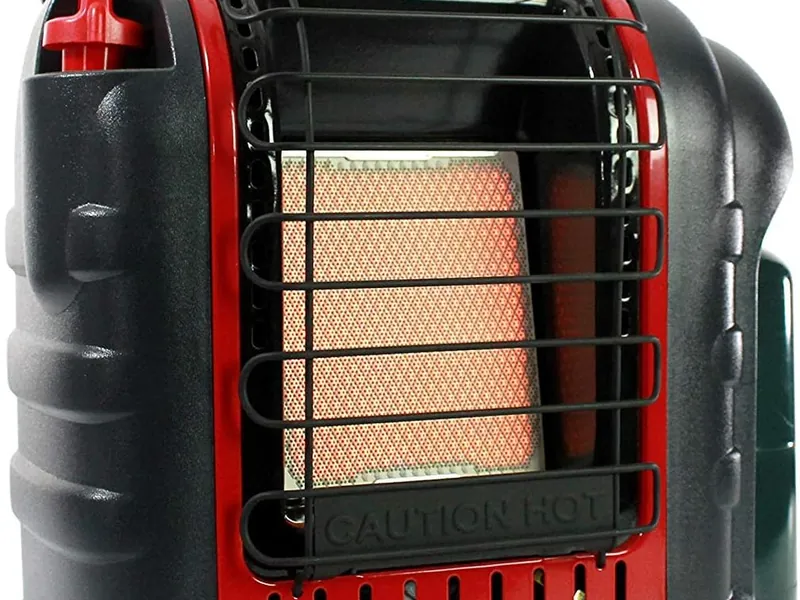
Best portable propane heater
Mr Heater Buddy
- Weight About 9 lb
- Sleeps Shoulder-season heat
The Buddy is the default portable propane heater for a reason: an oxygen-depletion sensor, a tip-over auto-shutoff, and an output range that suits a ground tent or an awning. It is not safe inside a sealed vehicle, and the propane heater spoke covers the CO and ventilation guardrails in full.
-
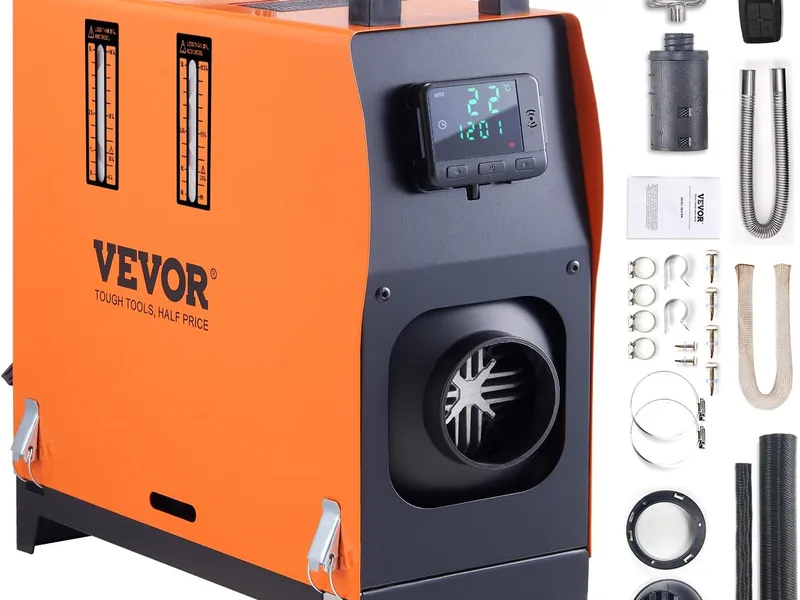
Best entry diesel air heater
Vevor 5kW Diesel Heater
- Weight About 10 lb installed
- Sleeps Overnight cabin heat
The Vevor is the budget gateway into diesel heat for vans and hard-side truck campers. Output and reliability vary unit to unit, which is why the diesel heater spoke discusses Espar and Webasto as the long-term replacements once you know a diesel heater fits your build.
Check price on Amazon Review in progress -
Best mid-size 12V fridge
Dometic CFX3 35
- Weight About 38 lb
- Sleeps Multi-day food storage
The CFX3 35 is the reference 12V fridge because of compressor efficiency, app control, and shock-tolerant ratings, and it is the easiest fridge to size a power system around. It is overkill for two-night weekends; it earns its price on week-long trips.
-
Best roof fan for vans and campers
MaxxAir MaxxFan Deluxe
- Weight About 11 lb
- Sleeps Continuous airflow
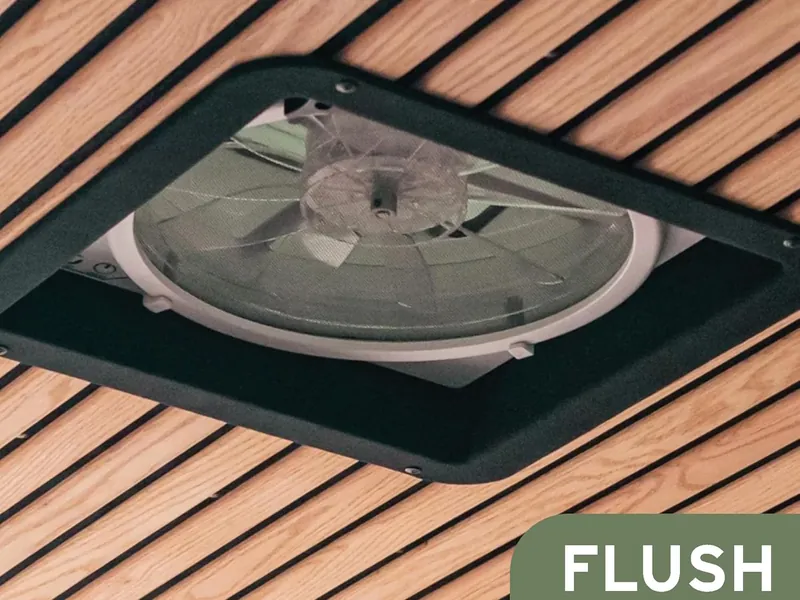
The MaxxFan Deluxe is the gold-standard roof fan in van and truck-camper builds because of rain-tolerant operation, 10-speed reversible airflow, and a remote. For ground tents or open SUVs, the portable Vornado-style fans in the camping fan guide are the right answer instead.
Side-by-side comparison
All four picks compared on the specs that matter
| Specification | Mr Heater Buddy | Vevor 5kW diesel | Dometic CFX3 35 | MaxxAir MaxxFan Deluxe |
|---|---|---|---|---|
| Format | Portable propane heater | Diesel air heater (install) | 12V compressor fridge | Roof vent fan |
| Best for | Shoulder-season tent / awning heat | Van and hard-side truck-camper basecamp | Multi-day food storage | Condensation and summer ventilation |
| Strength (pro) | Cheap, fast, no install | Overnight cabin heat without propane fumes | Best efficiency in class | Rain-tolerant, reversible, 10 speeds |
| Weakness (con) | CO risk - never run sealed | Requires roof or floor install | Big power-station prerequisite | Roof cutout install required |
| Power need | None (battery for ignition only) | Tiny continuous draw, ~10-20 Ah/day | 30-50W continuous, ~360 Wh/day | 5-30W on speed setting |
| Skip if | You cannot ventilate | You are not handy or do not have a permanent build | Trips are <3 days and ice resupply is easy | You only camp in cool dry climates |
Mr Heater Buddy
- Format
- Portable propane heater
- Best for
- Shoulder-season tent / awning heat
- Strength (pro)
- Cheap, fast, no install
- Weakness (con)
- CO risk - never run sealed
- Power need
- None (battery for ignition only)
- Skip if
- You cannot ventilate
Vevor 5kW diesel
- Format
- Diesel air heater (install)
- Best for
- Van and hard-side truck-camper basecamp
- Strength (pro)
- Overnight cabin heat without propane fumes
- Weakness (con)
- Requires roof or floor install
- Power need
- Tiny continuous draw, ~10-20 Ah/day
- Skip if
- You are not handy or do not have a permanent build
Dometic CFX3 35
- Format
- 12V compressor fridge
- Best for
- Multi-day food storage
- Strength (pro)
- Best efficiency in class
- Weakness (con)
- Big power-station prerequisite
- Power need
- 30-50W continuous, ~360 Wh/day
- Skip if
- Trips are <3 days and ice resupply is easy
MaxxAir MaxxFan Deluxe
- Format
- Roof vent fan
- Best for
- Condensation and summer ventilation
- Strength (pro)
- Rain-tolerant, reversible, 10 speeds
- Weakness (con)
- Roof cutout install required
- Power need
- 5-30W on speed setting
- Skip if
- You only camp in cool dry climates
Each pick links to its full review for alternatives, install notes, and trade-offs.
In this category
Open the guide vault
The hub gives you the map. These deeper guides answer the decisions that usually need their own page before you buy, install, or build.
Guide vault
Jump straight into the next decision instead of hunting for related links at the bottom of the page.
-
Best camping fans
Camping fan advice is split between cheap clip-on fans that die after one season and 12V roof fans that need installation, with nothing useful in between.
Pick the right fan by where it mounts, what battery it draws from, and how loud you can tolerate at night.
Read the guide -
Best 12V fridges for camping
12V fridges are pitched as drop-in cooler replacements, but the power draw and battery sizing turn a $700 fridge into a $1,500 system once you account for the station behind it.
Choose between Dometic CFX3, Iceco, ARB, and Whynter on actual amp draw, insulation, and how it pairs with your power station.
Read the guide
In this category
Coming next on this hub
Each entry below is being researched and field-tested. Bookmark this hub or check back for the published guide.
- Coming soon
Best diesel heaters for vans and truck campers
Sizing, installation, and reliability guide for permanent diesel air heaters.
Frequently asked questions
Is it safe to use a propane heater in a vehicle?
Do diesel heaters use a lot of electricity?
Is a 12V fridge better than a cooler?
From the editors
Editor's note, May 15, 2026: Updated May 2026. Heat and ventilation guidance stays conservative until each spoke ships with a dedicated safety section, manufacturer documentation review, and CO-detector testing notes.
While you're outfitting your vehicle
A vehicle camping setup is a system. These hubs cover the categories most readers decide on alongside this one.
- Off-Grid Power
Fridges, fans, and diesel heaters are only reliable if the battery and charging plan can support them.
- Sleep Comfort
Bedding, insulation, and pads can reduce how much heat you actually need.
- Truck-Bed Camping
Truck toppers and campers have different ventilation, condensation, and heater installation needs.
- Camp Kitchen
Induction cookers, propane fuel sourcing, and fridge planning all overlap with kitchen decisions.
- Vehicle Accessories
An awning over the kitchen turns combustion-heater safety from a closed-vehicle problem into an open-air one.