Disclosure: Some links on this page are affiliate links. Commissions never change our recommendations. Read the full disclosure.
Last updated
Hub overviewStart here
What is a portable power station?
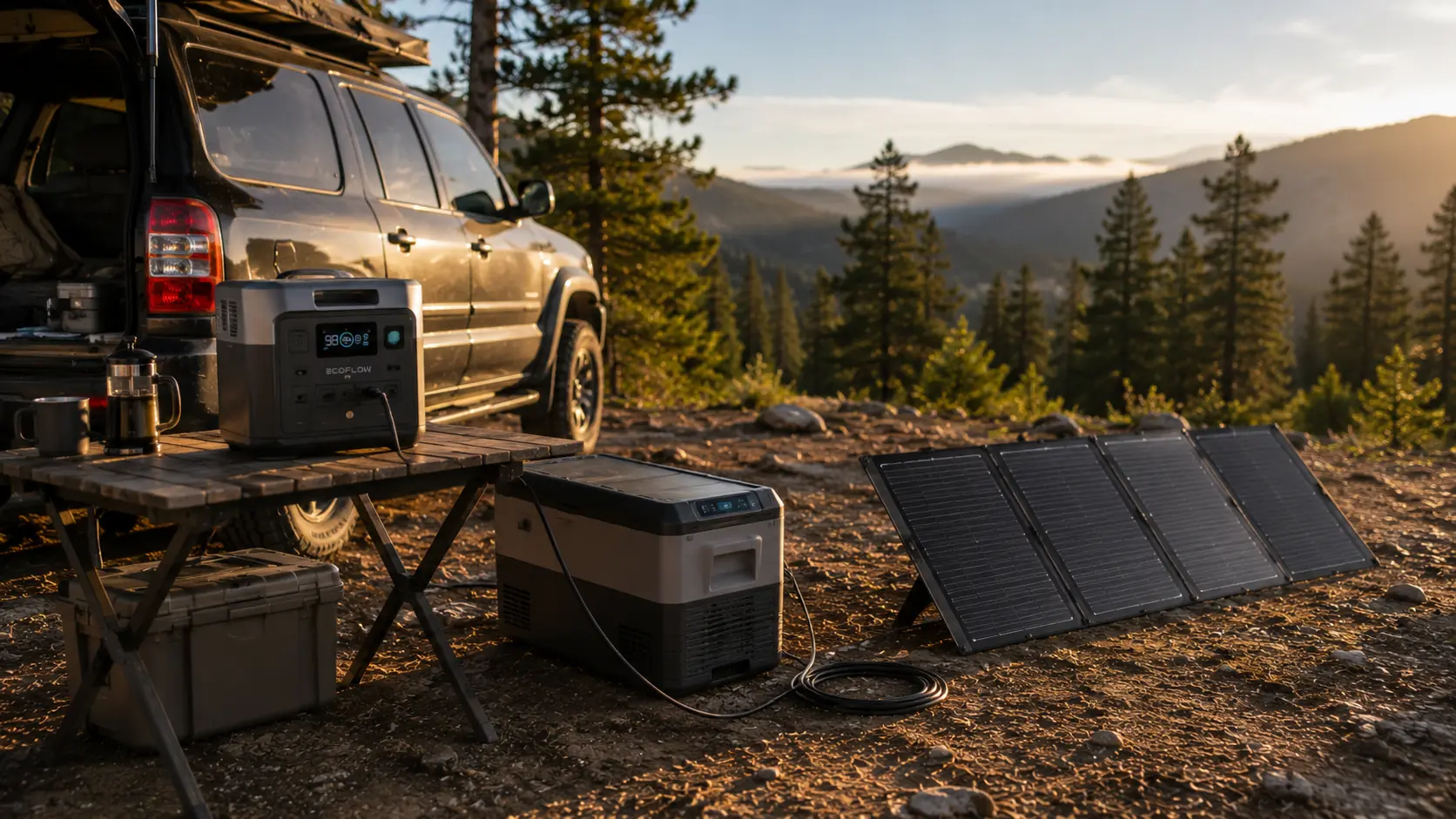
A portable power station is a sealed box that combines a lithium battery, an AC inverter, a charge controller, and a handful of output ports (AC outlets, USB-A, USB-C, 12V) with a small display. You charge it from a wall outlet at home, from solar panels at camp, or from the vehicle alternator while driving, then run a fridge, a fan, lights, a laptop, or a camera off the outputs.
The honest comparison is with a dual-battery LiFePO4 system, not with a fuel generator. A portable power station is plug-and-play, moves between vehicles, and refills from a wall outlet in 60-180 minutes. A dual-battery system is cheaper per usable watt-hour, can refill from the alternator at much higher rates, and lives permanently in the vehicle once installed. Whether you want one or the other depends on how long your trips are, how much you camp, and whether the battery needs to leave the vehicle.
If you camp two to three weekends a month and pull 600-1,500 Wh per day, a mid-size portable power station almost always wins. If you are building a van or truck for multi-week trips, or if your daily draw passes 2,000 Wh with electric cooking on top, a dedicated LiFePO4 bank with a DC-DC charger is usually the better long-term answer.
Portable power station vs dual-battery LiFePO4 build
| What you get | Portable power station | Dual-battery LiFePO4 |
|---|---|---|
| Setup time | Plug it in. Zero install. | Wiring, fuses, mounting - usually 4-8 hours |
| Cost band (1,500 Wh / 100 Ah) | $900 - $1,800 | $500 - $1,100 in parts; +$400-1,200 if installed |
| Cost per usable watt-hour | $0.60 - $1.20 | $0.30 - $0.65 |
| Portability | Yes - moves between vehicles | No - lives in the vehicle |
| Recharge from alternator | Limited (typically 100-300W via 12V) | Up to 800-1,500W with a DC-DC charger |
| Recharge from wall outlet | 60-180 minutes | 4-8 hours via dedicated AC charger |
| Inverter ceiling | 300W - 3,600W depending on model | Up to 3,000W with a separate inverter; sized to need |
| Cold-weather charging | Manufacturer-dependent; some have heaters | Add a battery heater pad or charge above 0C |
| Failure mode | Replace the whole unit | Replace the failed component (battery, charger, inverter) |
| Best for | Weekends, multiple vehicles, plug-and-play | Permanent builds, week+ trips, electric cooking |
Buyer criteria
Before you buy: the criteria that actually matter
-
Criterion 01
Daily watt-hour need (the only number that matters first)
List every device, its watt draw, and hours per day. A 60L 12V compressor fridge in 25C ambient usually pulls 30-50W with a 30-50 percent duty cycle, which lands around 350-600 Wh per day. Add 100-300 Wh for a ceiling fan, 50-150 Wh for lights, and 60-90 Wh per laptop charge. Most weekend setups land between 600 and 1,200 Wh per day; week-long fridge-and-fan trips often run 800-1,400.
-
Criterion 02
Battery capacity and usable depth of discharge
Marketed watt-hours are gross. Quality LiFePO4 stations let you use 90-95 percent of the rated capacity safely. NMC-chemistry stations should be treated more like 80 percent usable to preserve cycle life. Then add a 20-30 percent buffer for cloudy days, cold weather, and inverter losses. A 1,000 Wh LiFePO4 station realistically buys you 700-800 Wh of clean trip energy.
-
Criterion 03
Inverter ceiling and surge behavior
Continuous AC output is the steady-state limit; surge output is the peak the inverter can handle for a few seconds. Drip coffee makers (800-1,500W), hair dryers (1,200-1,800W), induction burners (1,200-1,800W), and microwaves can all clip an undersized inverter. Match the inverter to the loudest appliance you will run, not the average. A 700W inverter is fine for fridges, fans, and laptops; 1,500W+ is the threshold for one electric cooking appliance.
-
Criterion 04
Recharge inputs (solar, alternator, AC)
Three things to verify: maximum solar input (W and voltage range), AC recharge rate (how fast it refills from a wall outlet), and 12V/DC input rate (how fast a cigarette socket or DC-DC charger can refill it). A 200W rated solar input that caps at 100V open-circuit will not accept a 220W roof panel wired in series. Fast AC recharge (under 90 minutes) matters more than buyers expect for shore-power overnights.
-
Criterion 05
Chemistry and cycle life (LiFePO4 vs NMC)
LiFePO4 (LFP) is the standard for modern camping power: 3,000-6,500 cycles to 80 percent, safer thermal behavior, less afraid of partial discharge. NMC chemistry is lighter and cheaper per watt-hour but typically lasts 500-1,500 cycles. For a unit you plan to keep for 5+ years and use regularly, LFP almost always wins on lifetime cost per kWh delivered.
-
Criterion 06
Cold-weather behavior
Most lithium chemistries will discharge below freezing, but charging below 0C (32F) damages cells unless the station has a built-in heater. For winter camping or shoulder-season trips, verify charging temperature range and whether the unit limits input below freezing. NMC handles cold slightly better; LFP needs either a heater or a warm storage spot before charging.
Once you have answered these six, the right capacity band and recharge plan fall out of them. Work through the watt-hour math
Format taxonomy
Power formats at a glance
Four formats cover almost every off-grid setup on the market. Each solves a different combination of capacity, recharge speed, and portability. Pick the format that matches your daily watt-hour need and trip length first; the brand choice falls out of it.
-
Small portable (< 500 Wh)
3 - 7 kgPhones, laptops, lights, weekend trips with no fridge
e.g. Jackery Explorer 300 Plus, EcoFlow River 2, Bluetti AC2A
-
Mid portable (500 - 1,500 Wh)
8 - 20 kgCamping sweet spot: 12V fridge + fan + laptop for 2-4 nights
e.g. Jackery Explorer 1000 v2, EcoFlow Delta 2, Bluetti AC180
-
Large portable (1,500 - 3,600 Wh)
20 - 40 kgWeek-long base camp, induction cooking, partial home backup
e.g. EcoFlow Delta Pro, Bluetti AC200L, Jackery Homepower 3000
-
Dual-battery LiFePO4 build
Sized to needPermanent van/truck install, alternator-led recharge, longest cycle life
e.g. Renogy 100Ah/200Ah LFP + Victron DC-DC + 2,000W inverter
Once you have a watt-hour target from the sizing calculator, the format band falls out of it. Read the sizing guide
Best in 2026
Best portable power stations for camping in 2026 (preview)
Four stations lifted from our full buying guide. Each card explains who it is best for, the key specs, and what to weigh before buying. Picks come from manufacturer specifications, independent expert reviews, and recurring patterns in owner reports - we have not yet completed first-hand runtime testing on every unit in this preview.
-
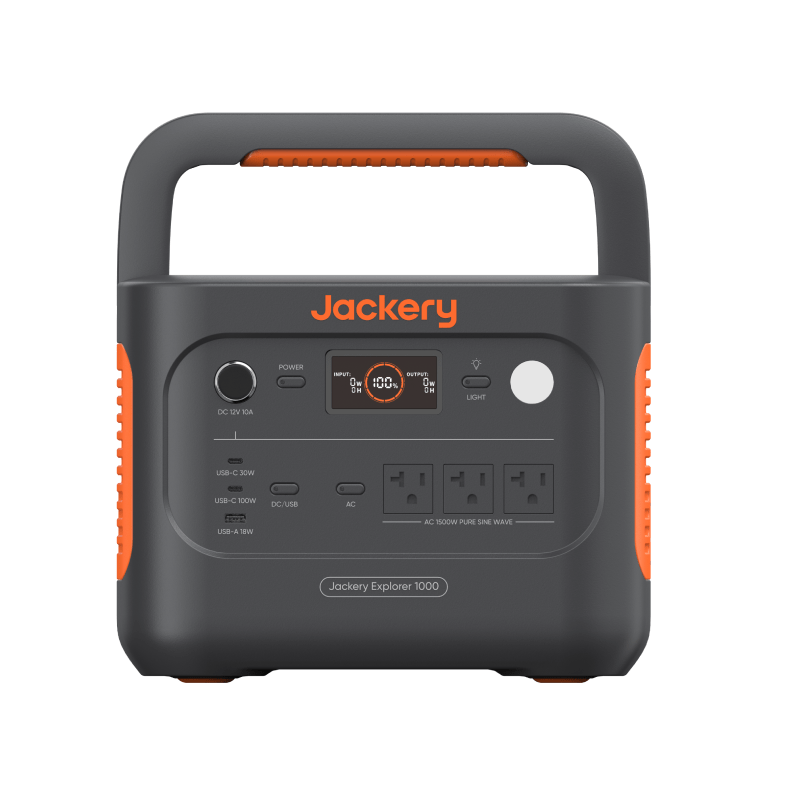
Best weekend fridge + fan station
Jackery Explorer 1000 v2
- Weight 10.8 kg / 23.8 lb
- Sleeps 1,070 Wh / 1,500W AC
The reference mid-size LiFePO4 station. Runs a 60L 12V fridge plus a fan and a laptop for two nights and refills from a wall outlet in about 90 minutes.
-
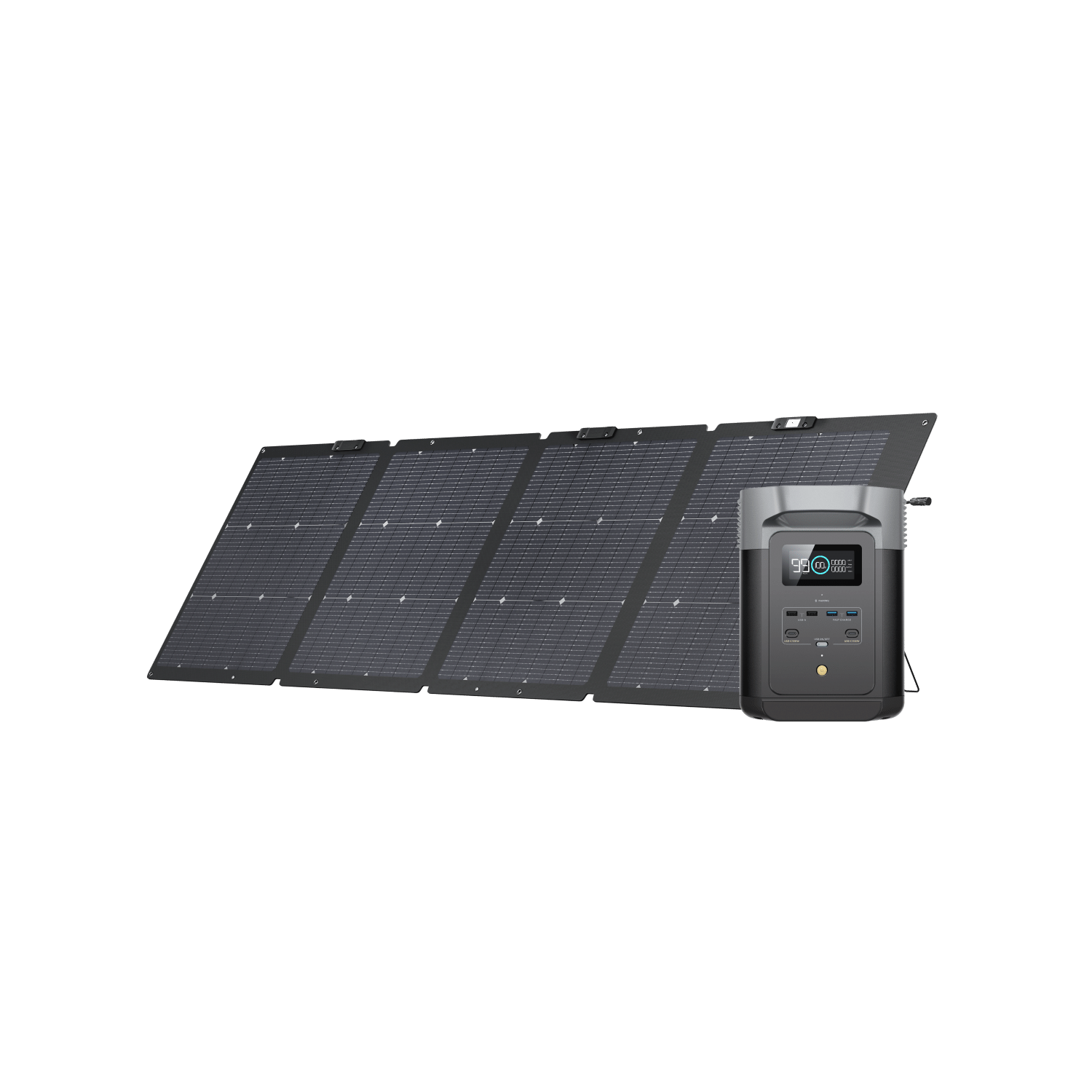
Best mid with fastest recharge
EcoFlow Delta 2
- Weight 12 kg / 27 lb
- Sleeps 1,024 Wh / 1,800W AC
Refills from a wall outlet in 50-80 minutes and accepts up to 500W of solar. The right answer when overnight shore-power refills matter or you run a 1,500W appliance occasionally.
-
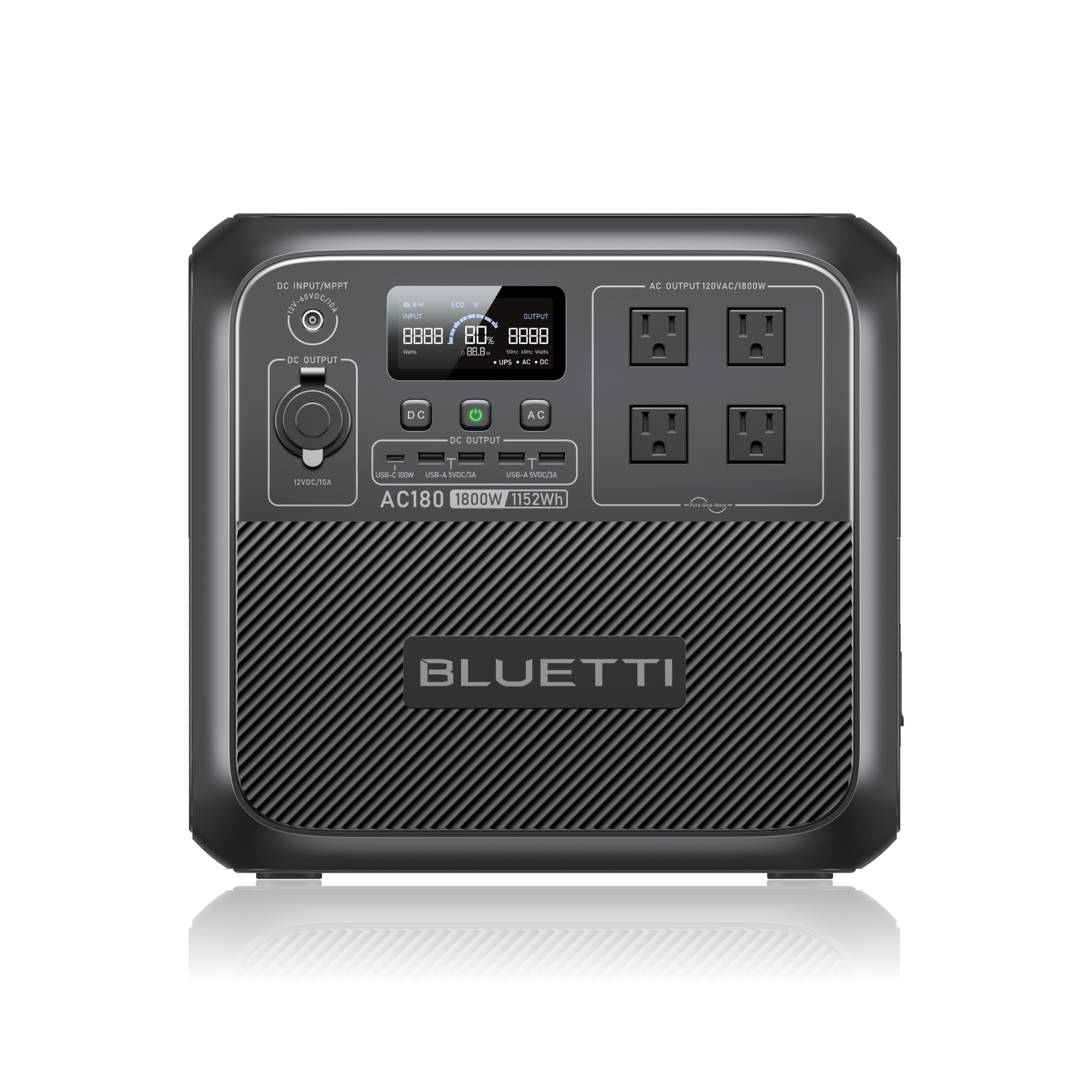
Best budget mid station
Bluetti AC180
- Weight 16 kg / 35 lb
- Sleeps 1,152 Wh / 1,800W AC
Larger capacity than the Jackery and EcoFlow at this tier and frequently the cheapest LFP option at 1,000+ Wh. Trade-off is slower 200W solar input and a heavier package.
-
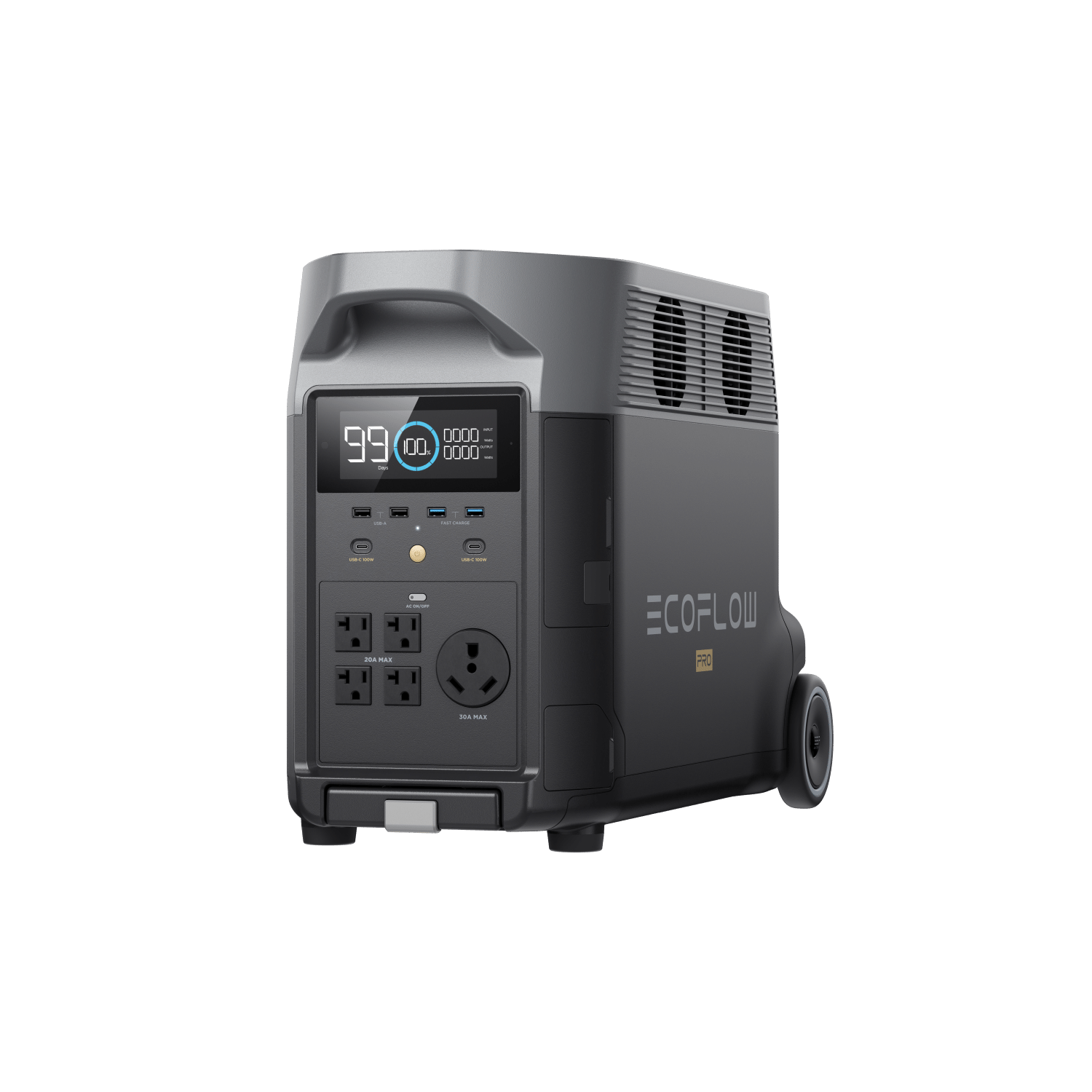
Best big station for week-long trips
EcoFlow Delta Pro
- Weight 45 kg / 99 lb
- Sleeps 3,600 Wh / 3,600W AC
Big enough for induction cooking on top of a fridge for a week, expandable to 25 kWh with extra batteries, and doubles as a partial home backup. Heavy enough that it lives in one vehicle.
Side-by-side comparison
All four picks compared on the specs that matter
| Specification | Jackery Explorer 1000 v2 | EcoFlow Delta 2 | Bluetti AC180 | EcoFlow Delta Pro |
|---|---|---|---|---|
| Capacity | 1,070 Wh | 1,024 Wh | 1,152 Wh | 3,600 Wh |
| Chemistry | LiFePO4 | LiFePO4 | LiFePO4 | LiFePO4 |
| AC output (continuous) | 1,500W (2,250W X-Boost) | 1,800W (2,700W X-Boost) | 1,800W | 3,600W (4,500W X-Boost) |
| Solar input (max) | 400W | 500W | 200W | 1,600W |
| AC recharge time (0-80%) | ~50 min | ~50 min | ~45 min | ~80 min |
| Cycles to 80% | 4,000 | 3,000 | 3,500 | 3,500 |
| Weight | 10.8 kg / 23.8 lb | 12 kg / 27 lb | 16 kg / 35 lb | 45 kg / 99 lb |
| Warranty | 5 years | 5 years | 5 years | 5 years |
| Best for | Weekenders who value simplest UI and lightest mid-size unit | Buyers who recharge from shore power overnight and want max solar | Buyers who want maximum capacity per dollar in the mid tier | Week-long trips with electric cooking and partial home backup |
| Skip if | You need >1,500W continuous AC or >400W solar input | You want maximum capacity per dollar in the mid tier | You need fast solar input or sub-12 kg weight | You want a unit you can lift solo into an SUV |
Jackery Explorer 1000 v2
- Capacity
- 1,070 Wh
- Chemistry
- LiFePO4
- AC output (continuous)
- 1,500W (2,250W X-Boost)
- Solar input (max)
- 400W
- AC recharge time (0-80%)
- ~50 min
- Cycles to 80%
- 4,000
- Weight
- 10.8 kg / 23.8 lb
- Warranty
- 5 years
- Best for
- Weekenders who value simplest UI and lightest mid-size unit
- Skip if
- You need >1,500W continuous AC or >400W solar input
EcoFlow Delta 2
- Capacity
- 1,024 Wh
- Chemistry
- LiFePO4
- AC output (continuous)
- 1,800W (2,700W X-Boost)
- Solar input (max)
- 500W
- AC recharge time (0-80%)
- ~50 min
- Cycles to 80%
- 3,000
- Weight
- 12 kg / 27 lb
- Warranty
- 5 years
- Best for
- Buyers who recharge from shore power overnight and want max solar
- Skip if
- You want maximum capacity per dollar in the mid tier
Bluetti AC180
- Capacity
- 1,152 Wh
- Chemistry
- LiFePO4
- AC output (continuous)
- 1,800W
- Solar input (max)
- 200W
- AC recharge time (0-80%)
- ~45 min
- Cycles to 80%
- 3,500
- Weight
- 16 kg / 35 lb
- Warranty
- 5 years
- Best for
- Buyers who want maximum capacity per dollar in the mid tier
- Skip if
- You need fast solar input or sub-12 kg weight
EcoFlow Delta Pro
- Capacity
- 3,600 Wh
- Chemistry
- LiFePO4
- AC output (continuous)
- 3,600W (4,500W X-Boost)
- Solar input (max)
- 1,600W
- AC recharge time (0-80%)
- ~80 min
- Cycles to 80%
- 3,500
- Weight
- 45 kg / 99 lb
- Warranty
- 5 years
- Best for
- Week-long trips with electric cooking and partial home backup
- Skip if
- You want a unit you can lift solo into an SUV
Specs from manufacturer pages as of May 2026. Prices are US MSRP and frequently discount 15-30 percent on sale. Battery sizes are gross; usable is approximately 90 percent for LiFePO4 chemistry.
In this category
Open the guide vault
The hub gives you the map. These deeper guides answer the decisions that usually need their own page before you buy, install, or build.
Guide vault
Jump straight into the next decision instead of hunting for related links at the bottom of the page.
-
What size power station do you need for camping?
Marketed watt-hours overstate real trip runtime by 20-40 percent. Most owners end up with too small or too big.
A worked watt-hour walkthrough by appliance and trip length, with four capacity bands and the cutover to a dual-battery LiFePO4 build.
Read the guide -
Jackery vs EcoFlow vs Bluetti
All three brands ship similar capacities at similar prices but differ on inverter behavior, recharge speed, chemistry, and warranty.
A criteria-by-criteria comparison plus model recommendations at the 500 Wh, 1,000 Wh, 1,800 Wh, and 3,000 Wh price tiers.
Read the guide -
Lithium battery for RV, van, and truck camping
Permanent LiFePO4 systems are cheaper per usable watt-hour than portable stations, but the wiring, fusing, and charging decisions block most first-time buyers.
A practical buyer's guide to 100-300 Ah LiFePO4 batteries, sizing the bank to alternator output, DC-DC charger selection, and the safety wiring that keeps insurance valid.
Read the guide
Tool
What size power station do you need?
Plug in your fridge, fan, lights, laptop, and trip length, and the calculator turns those into a daily watt-hour target plus a capacity band recommendation. No marketing math.
Inputs: fridge size, fan and lights usage, devices, trip length, solar panel rating.
Frequently asked questions
What size power station do I need for camping?
Is a portable power station better than a dual-battery setup?
Can a 200W solar panel run a 12V camping fridge?
Jackery, EcoFlow, or Bluetti - which brand is best?
How long does a portable power station last over the years?
Can I leave a power station in a hot or cold vehicle?
Do I need an inverter generator if I have a power station?
Where should I start if I am new to off-grid power?
From the editors
Editor's note, May 15, 2026: Updated May 2026 with a sizing-first decision framework: watt-hour math, real solar yield, and the dual-battery threshold. Product recommendations come from manufacturer specs, independent expert reviews, and recurring patterns in owner reports until our first-hand fridge, fan, and laptop runtime tests publish.
While you're outfitting your vehicle
A vehicle camping setup is a system. These hubs cover the categories most readers decide on alongside this one.
- Heating & Cooling
Fridges, fans, and some electric heat options determine most of the daily power budget. Sizing here flows from those loads.
- Rooftop Tents
Rooftop tent owners almost always add a fridge and lights once the sleep platform is solved; the power decision usually follows the tent decision.
- Camp Kitchen
Induction cooking moves the power budget from 1,000 Wh per day to 2,500+ Wh per day. The kitchen choice quietly drives the battery choice.
- Truck-Bed Camping
Slide-in campers, pop-up shells, and toppers vary widely in how much battery they can carry and where DC-DC chargers can mount.
- Vehicle Accessories
Lighting, awning fans, and electric chairs all draw from the same station - the accessories hub frames which loads are worth carrying.