Disclosure: Some links on this page are affiliate links. Commissions never change our recommendations. Read the full disclosure.
Last updated
Hub overviewStart here
What is a rooftop tent?
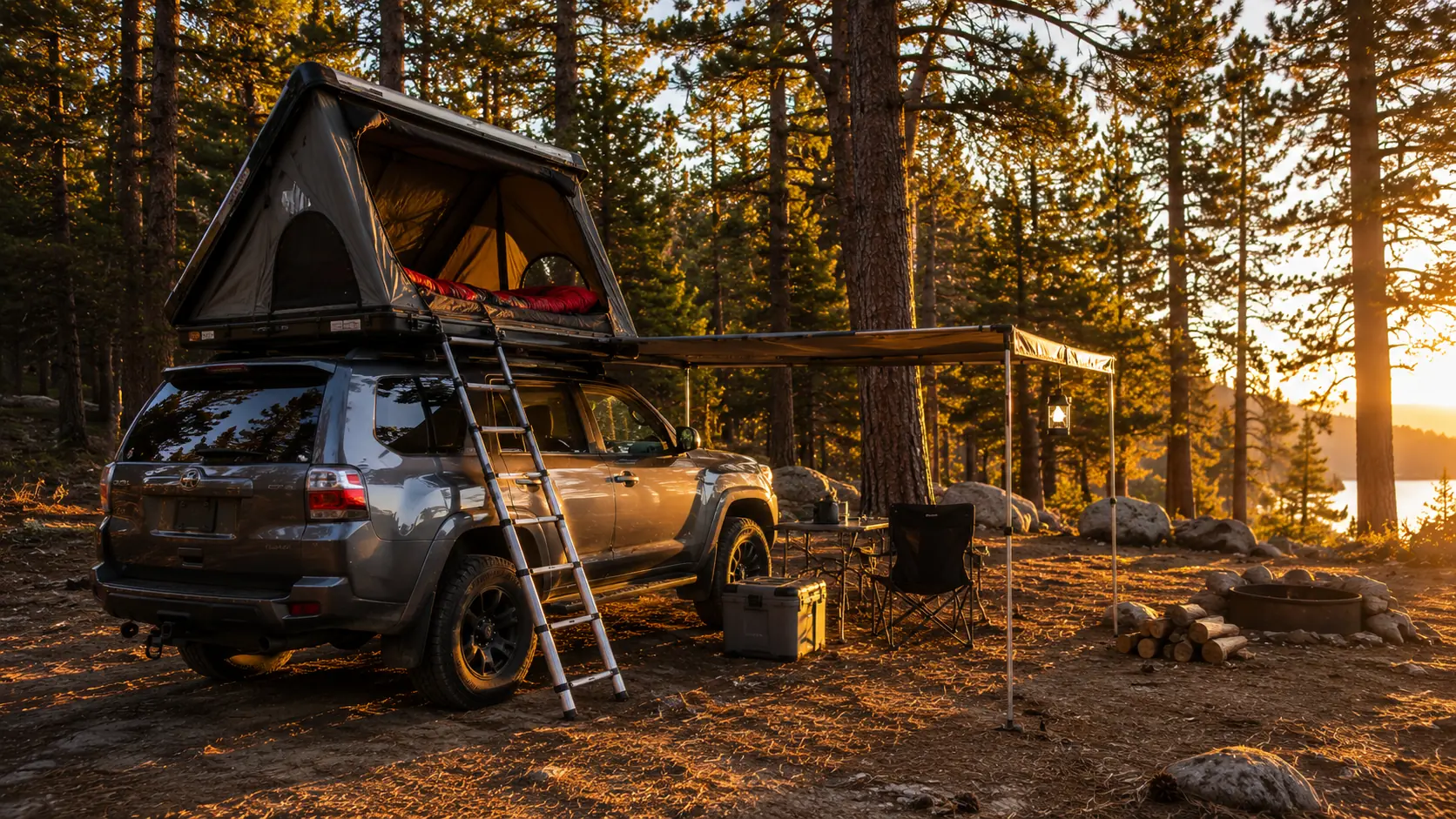
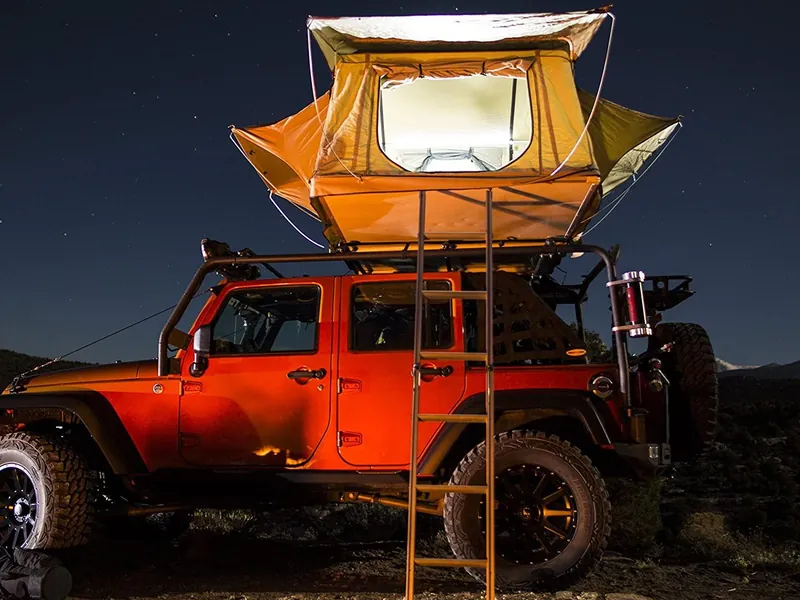
A rooftop tent is a sleep platform that mounts on the roof rack of a car, SUV, truck, or van. It unfolds in minutes into a tent with a built-in foam mattress, an integrated ladder, and walls that stay attached to the vehicle when packed away. You sleep above the ground rather than on it.
The honest comparison is with a ground tent, not with an RV or trailer. A rooftop tent is dramatically faster to set up and pack down, keeps the inside of the vehicle free for cooking and gear, and stays semi-made between trips. It also costs 5 to 25 times more, weighs 45-90 kg before bedding, and requires a vehicle and rack with the right load ratings. Whether one belongs on your roof depends on how often you camp from a vehicle, how much your roof can carry, and how much you value setup speed and dryness over cost.
If you camp two or three weekends a year, a good ground tent and a cot will usually leave you happier. If you camp most months, change sites often, dislike pitching in the rain, or already have a vehicle with serious roof capacity, a rooftop tent earns its money quickly.
Rooftop tent vs ground tent at a glance
| What you get | Rooftop tent | Ground tent |
|---|---|---|
| Setup time | 1-10 minutes | 20-45 minutes |
| Cost (tent only) | $1,200 - $5,500 | $200 - $400 |
| Off-ground sleep | Yes - above wet, cold, or muddy ground | No - on whatever surface you find |
| Weather handling | Excellent rain and wind shedding, fly stays attached | Varies; cheap tents leak, premium ones match rooftop |
| Storage between trips | Bedding can stay inside (closed) | Pack everything every trip |
| Dog or pet access | Hard - dogs cannot climb the ladder | Easy - dogs walk straight in |
| Midnight bathroom | Climb down a ladder in the dark | Unzip and step out |
| Parking constraints | Needs a level spot to sleep flat | Pitch wherever the ground is flat |
| Drive away with bed made | No - tent must be packed first | Tent stays at the campsite |
| Vehicle requirement | Roof rated for the dynamic load | Anything that can carry the packed tent |
Buyer criteria
Before you buy: the criteria that actually matter
-
Criterion 01
Sleeping capacity and footprint
A 2-person rooftop tent gives ~30 sq ft of floor (REI's reference for two adults). Couples plus a child or dog usually want a 3-person or 55+ sq ft model. The brochure capacity is for sleeping pads only - it does not include gear, dogs, or sit-up room. When in doubt, size up one person.
-
Criterion 02
Vehicle and rack capacity
Most factory roof rails handle 75-100 kg dynamic. Most aftermarket racks handle 75-100 kg dynamic and 250-300 kg static. The iKamper Skycamp 3.0 weighs 84 kg before bedding; the Yakima SkyRise HD weighs 70 kg. Dynamic rating is what your rack carries while moving; static is what it holds while parked, with people inside. The lower of the two controls the limit.
-
Criterion 03
Total cost of ownership
Plan $1,200 (entry softshell) to $5,500 (premium hardshell), plus $300-1,000 for an aftermarket rack and crossbars if your factory rails are not load-rated, plus $150-300 for bedding, an anti-condensation mat, and any ladder extension. Real working setups rarely land under $1,500.
-
Criterion 04
Weatherproofness and seasonality
Most rooftop tents are 3-season designs (mild and stormy spring, summer, and fall). True 4-season designs like the James Baroud Evasion and Alu-Cab Gen 3 use heavier canvas, cold-rated zippers, and better condensation control. Look at rainfly coverage, fabric drying time, and whether bedding can stay inside when packed.
-
Criterion 05
Setup and pack-down speed
Hardshell pop-ups: 1-3 minutes open, 3-7 minutes closed. Softshell fold-outs: 5-10 minutes open, 10-20 minutes closed. Speed matters if you move camp daily; less if you basecamp two or three nights at a time.
-
Criterion 06
Vehicle height and daily-driver impact
A typical hardshell adds 25-35 cm of stack height, costs 1-3 mpg on the highway, and changes wind noise above 60 mph. Check garage clearance, parkade limits, and ferry height restrictions before buying. A heavy roof load also raises the centre of gravity, which you will feel on tight corners.
Once you have answered these six, the hardshell vs softshell choice falls out of them. Read the format guide
Format taxonomy
Rooftop tent formats at a glance
Four formats cover almost every rooftop tent on the market. Each solves a different combination of speed, sleeping area, weight, and vehicle profile. Pick the format that fits your trip pattern first; the brand decision falls out of it.
-
Hardshell pop-up (clamshell)
70 - 90 kgFast setup at full family footprint
e.g. iKamper Skycamp 3.0, Roofnest Condor 2
-
Hardshell wedge
55 - 70 kgLowest profile, quietest highway driving
e.g. Roofnest Falcon, James Baroud Discovery
-
Softshell fold-out
55 - 90 kgLargest sleeping area per dollar
e.g. Smittybilt Overlander, Thule Tepui Autana
-
Softshell hybrid (half-roof)
45 - 60 kgSmall SUVs that share the roof with cargo
e.g. Thule Foothill
Once you have answered the six buying criteria above, the hardshell vs softshell choice falls out of them. Read the format guide
Best in 2026
Best rooftop tents in 2026 (preview)
Four picks lifted from our full buying guide. Each card explains who it is best for, the key specs, and what to weigh before buying. Photos courtesy of the manufacturer; we have not yet completed first-hand testing on every tent in this preview.
-
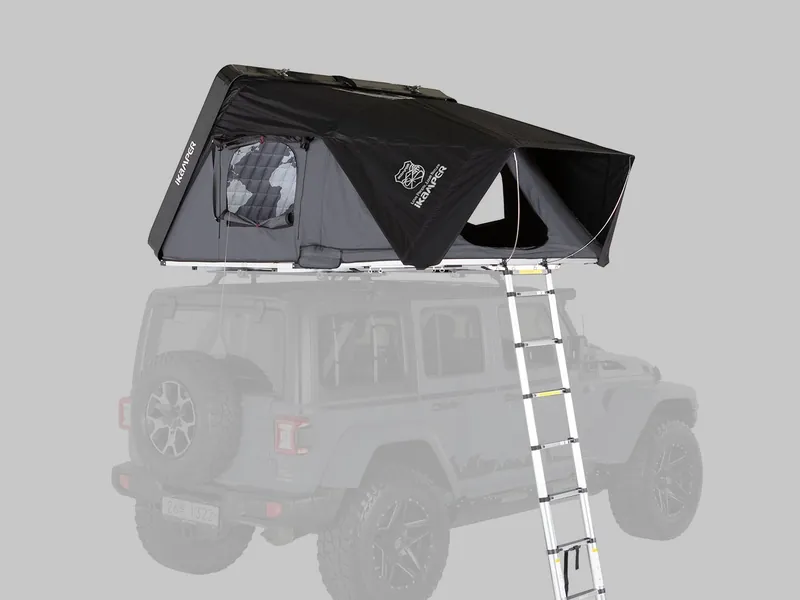
Best fast-setup family hardshell
iKamper Skycamp 3.0
- Weight 84 kg / 185 lb
- Sleeps 2 - 4
The reference clamshell hardshell. Pops open in under two minutes to a family-sized footprint and packs back down with bedding inside.
-
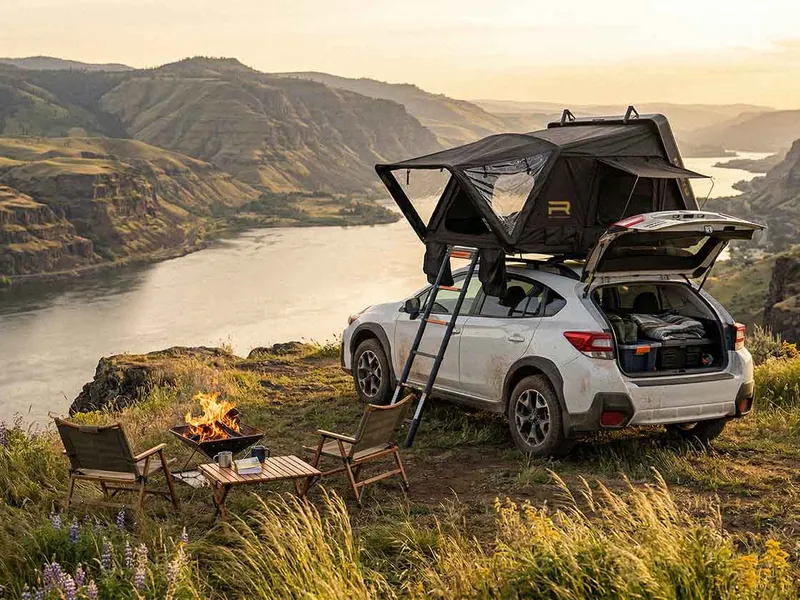
Best US-made hardshell
Roofnest Condor 2
- Weight 73 kg / 161 lb
- Sleeps 2 - 3
Designed and supported in Boulder, Colorado. Sets up as fast as the Skycamp, costs $600 less, and parts are easier to source in the US.
-
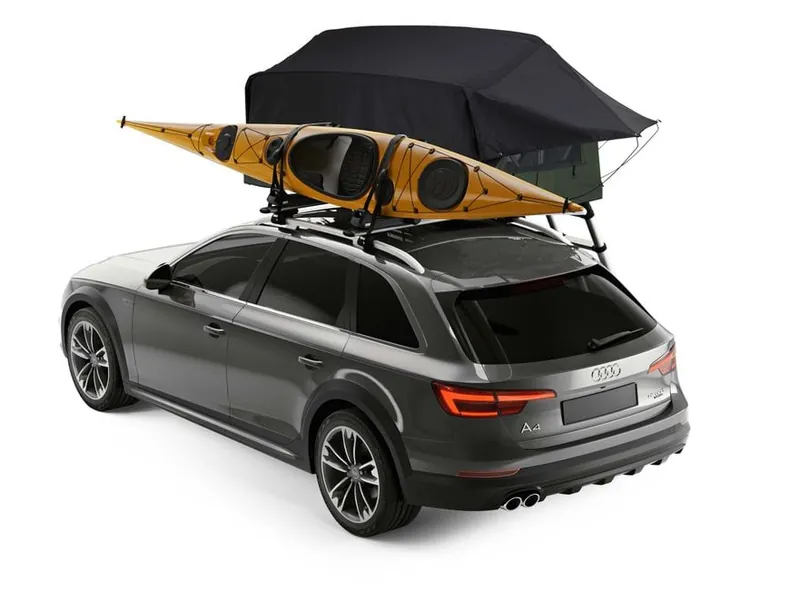
Best for small SUVs
Thule Foothill
- Weight 48 kg / 105 lb
- Sleeps 2
Half the roof footprint of a typical softshell, so cargo or kayaks can share the rack. The right answer for compact SUVs and crossovers.
-
Best budget
Smittybilt Overlander
- Weight 60 kg / 132 lb
- Sleeps 2 - 3
The lowest-friction first rooftop tent. Long-running design, parts and replacement covers easy to find, and the price leaves room for a proper rack.
Side-by-side comparison
All four picks compared on the specs that matter
| Specification | iKamper Skycamp 3.0 | Roofnest Condor 2 | Thule Foothill | Smittybilt Overlander |
|---|---|---|---|---|
| Format | Hardshell pop-up | Hardshell pop-up | Softshell, half-width | Softshell fold-out |
| Price (MSRP) | $3,999 | $3,395 | $1,699 | $1,200 - $1,500 |
| Closed weight | 84 kg / 185 lb | 73 kg / 161 lb | 48 kg / 105 lb | 60 kg / 132 lb |
| Open footprint | 213 x 211 cm | 213 x 142 cm | 213 x 122 cm | 244 x 142 cm |
| Closed footprint | 213 x 142 cm | 213 x 142 cm | 213 x 61 cm | 119 x 142 cm |
| Sleeps | 2 - 4 (king) | 2 - 3 (queen) | 2 (full) | 2 - 3 (queen) |
| Setup / pack-down | ~1 min / 5 min | ~1 min / 5 min | ~5 min / 10 min | ~10 min / 15 min |
| Mattress thickness | 6.4 cm (2.5") | 7 cm (2.75") | 4 cm (1.6") | 6 cm (2.4") |
| Annex compatible | Yes (sold separately) | Yes (sold separately) | No | Yes (included) |
| Warranty | 2 years | 2 years | 5 years (frame) | 1 year |
| Best for | Families wanting fastest family-size setup | US buyers who value local support and parts | Small SUVs that share the roof with cargo | First rooftop tent on a tight budget |
| Skip if | Garage clearance is tight or roof load is marginal | You need king-size width for two adults plus a child | You need three-person space or a larger mattress | You move camp daily or hate slow wet pack-downs |
iKamper Skycamp 3.0
- Format
- Hardshell pop-up
- Price (MSRP)
- $3,999
- Closed weight
- 84 kg / 185 lb
- Open footprint
- 213 x 211 cm
- Closed footprint
- 213 x 142 cm
- Sleeps
- 2 - 4 (king)
- Setup / pack-down
- ~1 min / 5 min
- Mattress thickness
- 6.4 cm (2.5")
- Annex compatible
- Yes (sold separately)
- Warranty
- 2 years
- Best for
- Families wanting fastest family-size setup
- Skip if
- Garage clearance is tight or roof load is marginal
Roofnest Condor 2
- Format
- Hardshell pop-up
- Price (MSRP)
- $3,395
- Closed weight
- 73 kg / 161 lb
- Open footprint
- 213 x 142 cm
- Closed footprint
- 213 x 142 cm
- Sleeps
- 2 - 3 (queen)
- Setup / pack-down
- ~1 min / 5 min
- Mattress thickness
- 7 cm (2.75")
- Annex compatible
- Yes (sold separately)
- Warranty
- 2 years
- Best for
- US buyers who value local support and parts
- Skip if
- You need king-size width for two adults plus a child
Thule Foothill
- Format
- Softshell, half-width
- Price (MSRP)
- $1,699
- Closed weight
- 48 kg / 105 lb
- Open footprint
- 213 x 122 cm
- Closed footprint
- 213 x 61 cm
- Sleeps
- 2 (full)
- Setup / pack-down
- ~5 min / 10 min
- Mattress thickness
- 4 cm (1.6")
- Annex compatible
- No
- Warranty
- 5 years (frame)
- Best for
- Small SUVs that share the roof with cargo
- Skip if
- You need three-person space or a larger mattress
Smittybilt Overlander
- Format
- Softshell fold-out
- Price (MSRP)
- $1,200 - $1,500
- Closed weight
- 60 kg / 132 lb
- Open footprint
- 244 x 142 cm
- Closed footprint
- 119 x 142 cm
- Sleeps
- 2 - 3 (queen)
- Setup / pack-down
- ~10 min / 15 min
- Mattress thickness
- 6 cm (2.4")
- Annex compatible
- Yes (included)
- Warranty
- 1 year
- Best for
- First rooftop tent on a tight budget
- Skip if
- You move camp daily or hate slow wet pack-downs
Specs from manufacturer pages as of May 2026. Footprints are listed length x width. Prices are US MSRP and exclude rack, bedding, and shipping.
In this category
Open the guide vault
The hub gives you the map. These deeper guides answer the decisions that usually need their own page before you buy, install, or build.
Guide vault
Jump straight into the next decision instead of hunting for related links at the bottom of the page.
-
Hardshell or softshell? Which format fits you
Hardshell tents pack down in two minutes and shed rain easily. Softshells give you more sleeping area for the money. Both have legitimate use cases.
A side-by-side breakdown of setup time, weather behaviour, weight, cost, and the trip patterns each format wins.
Read the guide -
How to install a rooftop tent in your driveway
Installing a 70+ kg tent on the roof of your vehicle without bending crossbars or stripping bolts is a two-person job with a real torque sequence.
A driveway walkthrough covering tools, lift technique, mounting hardware, torque specs, ladder angle, and the 100-mile re-torque check.
Read the guide -
The 6 rooftop tent accessories that actually matter
The accessory market is enormous and most of it is upsell. Three or four accessories make a real comfort difference; the rest do not justify the spend.
A short list of must-haves (anti-condensation mat, bedding, ladder extension), useful upgrades (annex, awning), and the items we would skip.
Read the guide
Tool
Will a rooftop tent fit my vehicle?
Run roof-load, rack capacity, tent weight, and sleeper math in 60 seconds before you spend $2,000 on a tent that will not safely mount.
Inputs: vehicle make and model, rack type, tent weight, sleeper weight.
Frequently asked questions
Is a rooftop tent worth it compared to a regular tent?
Will a rooftop tent fit on my car or SUV?
How much does the whole setup cost in 2026?
Hardshell or softshell - which one should I buy?
Can I leave a rooftop tent on year-round?
Where should I start if I am new to rooftop tents?
What is the difference between a rooftop tent and a regular tent?
How long do rooftop tents last?
Are rooftop tents safe at highway speeds?
From the editors
Editor's note, May 15, 2026: Updated May 2026 with a deeper decision framework for rooftop tent fitment, load ratings, ownership costs, and common failure modes. Product-specific recommendations will publish only after first-hand testing notes and photos are complete.
While you're outfitting your vehicle
A vehicle camping setup is a system. These hubs cover the categories most readers decide on alongside this one.
- Vehicle Accessories
Roof racks, awnings, and storage accessories decide whether a tent fits and remains useful.
- Sleep Comfort
The tent is only the shelter; pads, bedding, and ventilation determine how well you sleep.
- Off-Grid Power
A roof tent setup often pairs with lights, fridge power, and charging for multi-day trips.
- Camp Kitchen
Most rooftop tent campers cook on the tailgate or under an awning - the kitchen layout decisions belong together.
- Heating & Cooling
Rooftop tents are colder than sleeping inside the vehicle; ventilation, fans, and condensation control come from the climate hub.