Disclosure: Some links on this page are affiliate links. Commissions never change our recommendations. Read the full disclosure.
Last updated
Reviewed May 15, 2026How we picked
Every tent in this shortlist clears five gates: it has to deploy on a real, common vehicle class without forcing an unsafe rack upgrade; the manufacturer publishes weight, sleeping footprint, mattress thickness, and warranty; at least one independent review and one owner-feedback pattern back the marketing claims; the brand has a working dealer network and replacement parts; and we describe the hidden accessory costs upfront rather than burying them. We left several recognisable models out because they failed gate three or gate four, not because they are bad products.
Quick comparison
| Product | Format | Closed weight | Sleeps | Price | Where to buy |
|---|---|---|---|---|---|
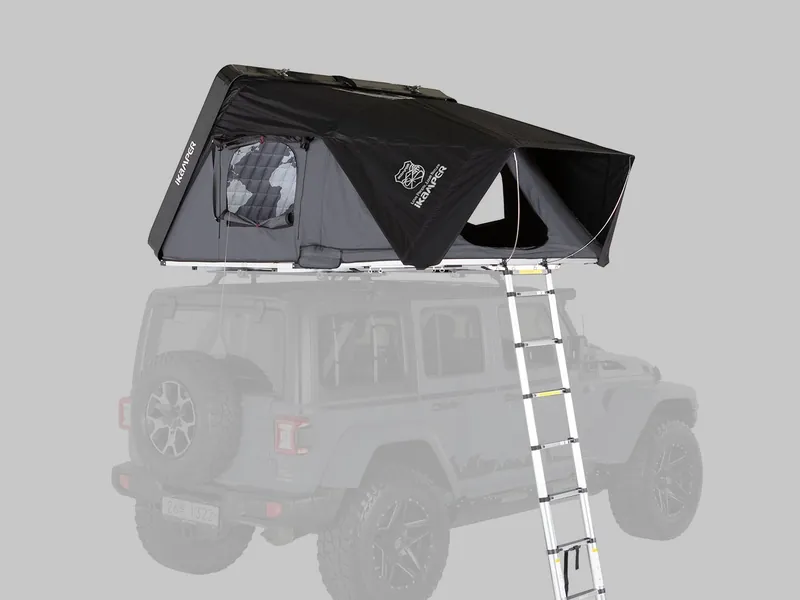 | Hardshell pop-up | ~84 kg / 185 lb | 2-4 | $3,999 | See it at iKamper |
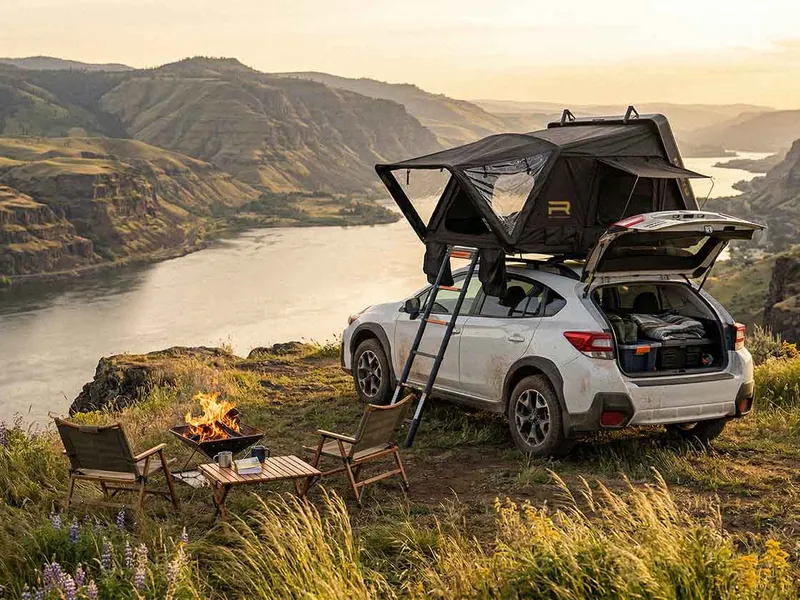 | Hardshell pop-up | ~70 kg / 155 lb | 2-3 | $3,395 | See it at Roofnest |
| | Hardshell pop-up | ~57 kg / 125 lb | 2 | $2,995 | See it at Roofnest |
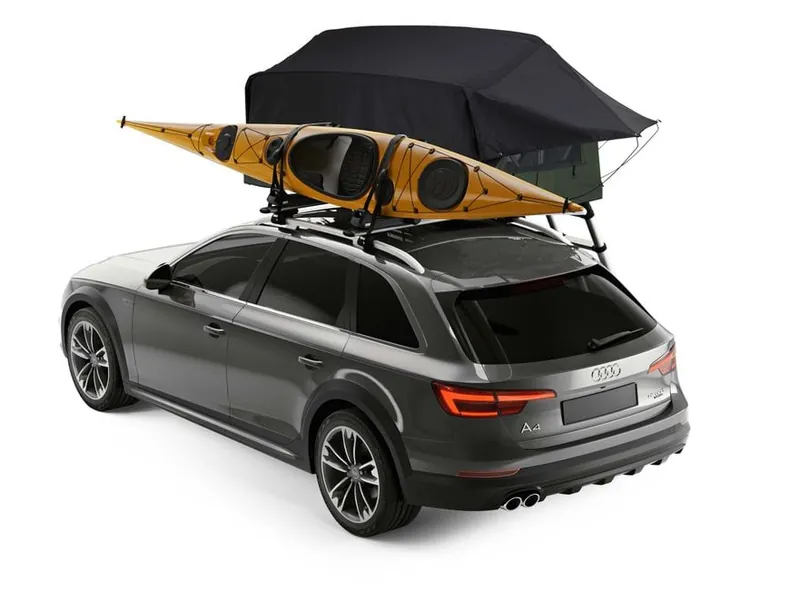 | Softshell, half-width | ~48 kg / 105 lb | 2 | $1,699 | Check price |
| | Softshell with annex | ~75 kg / 165 lb | 3 | $2,300 | Check price |
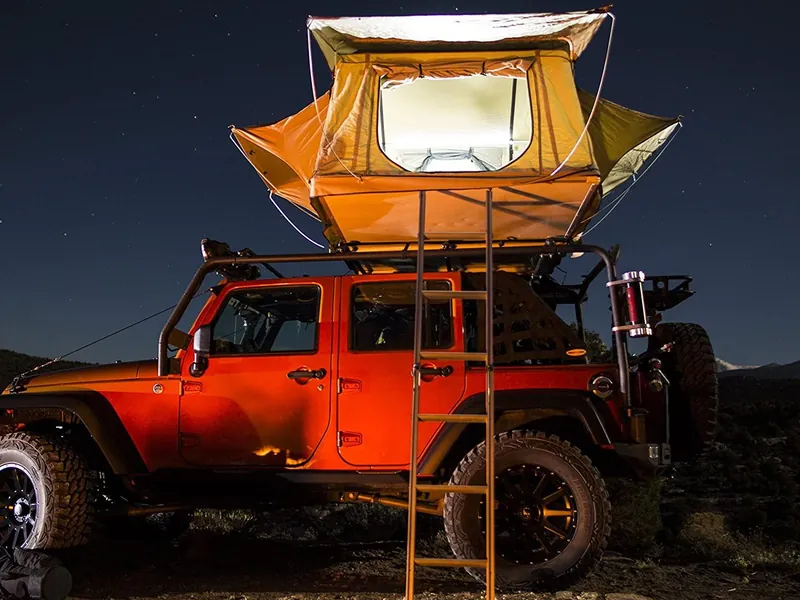 | Softshell | ~52 kg / 117 lb | 2 | $1,200-$1,500 | Check price |
| | Hardshell clamshell | ~73 kg / 161 lb | 2 | $4,800 | See it at James Baroud |
| | Hardshell pop-up | ~85 kg / 187 lb | 3 | $5,499 | See it at Alu-Cab |
Rooftop tent shortlist quick comparison
Best fast-setup family hardshell
iKamper Skycamp 3.0
$3,999
- Format
- Hardshell pop-up
- Closed weight
- ~84 kg / 185 lb
- Sleeps
- 2-4
Best balanced first hardshell
Roofnest Condor 2
$3,395
- Format
- Hardshell pop-up
- Closed weight
- ~70 kg / 155 lb
- Sleeps
- 2-3
Best low-profile hardshell for daily drivers
Roofnest Sparrow 2
$2,995
- Format
- Hardshell pop-up
- Closed weight
- ~57 kg / 125 lb
- Sleeps
- 2
Best for small SUVs and crossovers
Thule Foothill
$1,699
- Format
- Softshell, half-width
- Closed weight
- ~48 kg / 105 lb
- Sleeps
- 2
Best family softshell with annex
Thule Tepui Autana 3
$2,300
- Format
- Softshell with annex
- Closed weight
- ~75 kg / 165 lb
- Sleeps
- 3
Best budget softshell
Smittybilt Overlander
$1,200-$1,500
- Format
- Softshell
- Closed weight
- ~52 kg / 117 lb
- Sleeps
- 2
Best premium hardshell for long-term durability
James Baroud Evasion
$4,800
- Format
- Hardshell clamshell
- Closed weight
- ~73 kg / 161 lb
- Sleeps
- 2
Best for trucks, 4Runners, and serious overland use
Alu-Cab Gen 3
$5,499
- Format
- Hardshell pop-up
- Closed weight
- ~85 kg / 187 lb
- Sleeps
- 3
Weights and prices are typical at time of review and vary by configuration. Confirm current numbers on the manufacturer page before purchase.
The eight picks
Each card below names what the tent is best for, where it falls short, and what to add to the cart with it. The buy buttons go to Amazon search so the listing always reflects today's price and availability; brand-direct links are included for the full spec sheet.
Best fast-setup family hardshell
iKamper Skycamp 3.0
- Closed weight ~84 kg (185 lb)
- Sleeping area 210 x 190 cm with extension
- Mattress ~7 cm built-in foam
- Closed height added ~31 cm
- Warranty 2 yr frame, 1 yr fabric
- Closed footprint 215 x 145 cm
The Skycamp 3.0 is the reference for fast-setup hardshell with a family footprint. The diamond-fold extension nearly doubles the sleeping area without adding the wet pack-down penalty of a full softshell, and it consistently lands at or near the top of independent rankings from Switchback Travel and OutdoorGearLab.
Owners who upgraded from the original Skycamp call out the improved fabric tension and quieter highway profile as the main reasons to pay current pricing rather than chasing a used Gen 1.
What works
- Family-size footprint without a full softshell pack-down.
- Closes around bedding in under two minutes.
- Strong dealer network and resale market.
What to weigh
- Heavy: needs a serious rack on most crossovers.
- Top-tier price; the annex is sold separately.
- Tall closed height costs garage flexibility.
Skip if: Your rack static load is below 350 kg, you camp solo or as a couple, or your budget needs the complete kit under $4,000.
iKamper does not sell through Amazon and we are not in their affiliate programme, so this is a plain link to the product page. We earn nothing if you buy it.
Best balanced first hardshell
Roofnest Condor 2
- Closed weight ~70 kg (155 lb)
- Sleeping area 213 x 142 cm
- Mattress ~6 cm built-in
- Closed height added ~28 cm
- Warranty 2 yr
- Built-in floor Yes - reduces sag
If you cannot decide between fast-setup hardshell, family footprint, and budget, the Condor 2 is the most balanced single answer in the segment. It deploys in under a minute, sleeps two adults plus a child, and sits at a price point well under the Skycamp 3.0.
The most common owner critique is closed-tent height: it sits a touch taller than the Sparrow on the roof. In return, the built-in floor gives more headroom inside than most pop-ups in this price band.
What works
- Best price-to-feature ratio in the hardshell segment.
- Built-in floor gives noticeably more headroom.
- Wide enough for two plus a small child.
What to weigh
- Slightly taller closed than wedge alternatives.
- Annex is third-party rather than first-party.
- Not the lightest option for marginal-load vehicles.
Skip if: The lowest possible highway noise is non-negotiable, or your rack truly cannot carry 70 kg + sleepers.
Roofnest does not sell through Amazon and we are not in their affiliate programme, so this is a plain link to the product page. We earn nothing if you buy it.
Best low-profile hardshell for daily drivers
Roofnest Sparrow 2
- Closed weight ~57 kg (125 lb)
- Sleeping area 213 x 142 cm
- Mattress ~6 cm built-in
- Closed height added ~17 cm
- Warranty 2 yr
- Profile Wedge - hinges at rear
The Sparrow is the most commonly recommended wedge-style hardshell for owners who care about highway noise, fuel economy, and garage clearance. The wedge sits low on the roof, deploys in under a minute, and presents the smallest drag penalty in this shortlist.
It sleeps two and is intentionally not designed for families. Headroom near the foot of the bed is restricted by the wedge geometry; multi-week-trip owners cite this as a small but real annoyance.
What works
- Lowest profile in the shortlist - quiet on the highway.
- Light enough for many crossovers and small SUVs.
- Easiest hardshell to live with on a daily driver.
What to weigh
- Restricted headroom at the foot of the bed.
- No family configuration; couples only.
- Wedge opening means the door faces the rear.
Skip if: You need to sit fully upright inside the tent or sleep more than two adults.
Roofnest does not sell through Amazon and we are not in their affiliate programme, so this is a plain link to the product page. We earn nothing if you buy it.
Best for small SUVs and crossovers
Thule Foothill
- Closed weight ~48 kg (105 lb)
- Sleeping area 212 x 124 cm
- Mattress ~5 cm
- Closed footprint Half roof - shares with cargo
- Warranty Lifetime frame, 1 yr fabric
- Closed height added ~33 cm
The Foothill is built for the constraint that ends most crossover and small-SUV rooftop dreams: roof load. It uses a half-width footprint so the other half of the roof can carry a kayak, surfboard, or cargo box, and at ~48 kg it stays well inside the dynamic load of most Subaru Outback, RAV4, CR-V, and Forester setups equipped with quality aftermarket crossbars.
Confirm your specific vehicle's dynamic rating and your aftermarket crossbar's static rating before buying. The Foothill solves the load problem for most light vehicles; it does not solve it for all.
What works
- Lightest tent on the list - works on light SUVs.
- Leaves half the roof free for a cargo box or kayak.
- Lifetime frame warranty is rare at this price.
What to weigh
- Tighter sleeping footprint than full-width tents.
- Setup is slower than any hardshell here.
- Limited annex options compared to the Autana 3.
Skip if: You need a full-roof tent for two adults and a child.
Best family softshell with annex
Thule Tepui Autana 3
- Closed weight ~75 kg (165 lb)
- Sleeping area 213 x 142 cm + annex below
- Mattress ~6 cm high-density foam
- Closed height added ~33 cm
- Warranty Lifetime frame, 1 yr fabric
- Annex Built-in, ground-reaching
The Autana 3 has been the long-running family pick because of the integrated annex room. The annex extends down to the ground, doubles as a changing space and gear vestibule, and removes most of the friction families report with smaller rooftop tents. Setup is slower than any hardshell in this guide; that is the expected tradeoff for the larger interior.
Independent reviews consistently make two points: the annex is the reason to buy the Autana over the lighter Tepui Kukenam, and wet pack-down is the format's persistent weakness. Plan for a dry-out morning at home after rainy trips.
What works
- Built-in annex is genuinely useful for families.
- Lifetime frame warranty.
- Sleeps three without crowding two adults.
What to weigh
- Slow setup, especially with annex deployed.
- Wet pack-down is a real time penalty.
- Tall closed height limits parking options.
Skip if: You move camp every night or pack down wet often - a hardshell will save you hours per trip.
Best budget softshell
Smittybilt Overlander
- Closed weight ~52 kg (117 lb)
- Sleeping area 244 x 142 cm
- Mattress ~5 cm built-in
- Closed height added ~33 cm
- Warranty 1 yr limited
- Installed base Largest of any tent here
The Overlander is the most common entry-level softshell in owner forums. It sells in the $1,200 to $1,500 range, sleeps two adults comfortably, and has the largest installed base of any tent on this list. That installed base is why we include it: replacement parts are easy to find, owner-modification guidance is everywhere, and resale is liquid.
The dominant owner critique is condensation in cold and damp weather, which is largely fixable with an anti-condensation mat and disciplined ventilation. The second is fabric longevity past five seasons of regular use. Both are price-tier expectations more than product flaws.
What works
- Cheapest credible pick - good first rooftop tent.
- Huge installed base means easy parts and resale.
- Generous 244 cm sleeping length.
What to weigh
- Condensation needs active management.
- Fabric tends to fade and weaken past 5 seasons.
- 1-year warranty is the shortest on this list.
Skip if: You camp year-round in wet climates or expect a 10-year service life.
Best premium hardshell for long-term durability
James Baroud Evasion
- Closed weight ~73 kg (161 lb)
- Sleeping area 213 x 142 cm
- Mattress ~7 cm
- Closed height added ~25 cm
- Warranty 5 yr structural
- Notable Built-in solar fan
The Evasion is the tent owners cite when the conversation turns to ten-year service life rather than three-year style. Construction is a step above the volume hardshells: thicker shell, beefier hinges, and a five-year structural warranty most competitors do not match. The integrated solar-powered ceiling fan is a small but real condensation control feature.
It is two adults only by design. If you need a family footprint, the Skycamp 3.0 is the better spend at this price tier.
What works
- Construction quality at the top of the segment.
- 5-year structural warranty - longest on this list.
- Built-in solar fan is the cleanest condensation fix.
What to weigh
- Strict two-person sleeping capacity.
- Premium price even before accessories.
- Smaller US dealer network than iKamper or Roofnest.
Skip if: You want a family footprint or your trips look more like long weekends than multi-month expeditions.
James Baroud does not sell through Amazon and we are not in their affiliate programme, so this is a plain link to the product page. We earn nothing if you buy it.
Best for trucks, 4Runners, and serious overland use
Alu-Cab Gen 3
- Closed weight ~85 kg (187 lb)
- Sleeping area 218 x 145 cm
- Mattress ~7 cm
- Closed height added ~28 cm
- Warranty 2 yr shell and frame
- Construction Aluminium shell, serviceable hinges
The Gen 3 is built for the heavy end of the segment and the tent that long-term overlanders on Tacoma, 4Runner, Wrangler, and full-size truck platforms tend to settle on once they have run cheaper tents and worn them out. The shell is aluminium, the hinges and gas struts are designed to be re-serviced rather than replaced, and the warranty support exists in writing rather than only in marketing.
It is the most expensive pick in this shortlist for a reason. If your trips look more like long weekends than three-month expeditions, the Skycamp 3.0 or Condor 2 deliver most of the same experience for less money.
What works
- Aluminium shell built for re-service, not throwaway.
- Highest static-load tolerance in the shortlist.
- Trusted on multi-continent expedition rigs.
What to weigh
- Heaviest tent here - needs a serious rack.
- Highest sticker price by a wide margin.
- Smaller dealer network in North America.
Skip if: Your rack static load is below 400 kg or your complete kit budget needs to fit under $4,000.
Alu-Cab does not sell through Amazon and we are not in their affiliate programme, so this is a plain link to the product page. We earn nothing if you buy it.
How to choose between them
Pick the format first, the use case second, and the brand third. The hardshell vs softshell guide handles the format decision in detail. From there:
- If you move camp often: Skycamp 3.0 (family), Sparrow (couple), or Condor 2 (balanced).
- If you basecamp: Autana 3 (family with annex) or Smittybilt Overlander (budget).
- If your roof load is marginal: Foothill or no rooftop tent at all.
- If you are planning long-distance overlanding: Alu-Cab Gen 3 or James Baroud Evasion.
The four decisions before you click buy
Each section below is one decision the buyer has to make before brand shopping. Numbers come from manufacturer specifications and the references at the end of this page.
Vehicle and rack capacity
- Most factory roof rails 75-100 kg dynamic
- Yakima/Thule premium crossbars 75 kg dynamic / 270+ kg static
- Typical hardshell tent weight 55-90 kg
- Typical softshell tent weight 45-75 kg
Two numbers control whether a rooftop tent is even an option. The roof's dynamic load rating is what it can carry while moving and is published in the vehicle owner's manual. The rack's static load is what it can support while parked, with sleepers inside, and is published by the rack manufacturer rather than the carmaker. Yakima and Thule both list separate static figures for most of their bar systems and they typically run three to five times the dynamic figure.
The math itself is simple. Add tent weight, mattress and bedding weight, and the heaviest two sleepers you will ever put up there. That total has to fit under the static rating of the rack and crossbars. Tent plus bedding alone has to fit under the dynamic rating while you drive. If either is tight, the right move is an aftermarket rack with a higher rating, not a heavier tent.
Setup speed and pack-down speed
- Hardshell setup 30 sec - 2 min
- Softshell setup 5 - 10 min
- Hardshell pack-down (wet) 1 - 3 min
- Softshell pack-down (wet) 10 - 20 min
How often you move camp matters more than how long the trip is. If you pull into a new site every night, sub-two-minute hardshell setup compounds quickly, especially in rain or after dark. If you park for three or four nights at a time, the slower softshell setup is amortised across the stay and you get more interior space for the money.
Wet pack-down is the spec most buyers underestimate and is where hardshells quietly justify their premium. Folding a saturated softshell rainfly back into the tent body is slow, awkward, and primes the fabric for mildew if the next dry day does not arrive within 48 hours. Hardshells close around their own bedding without exposing fabric, which is why they dominate recommendations from Pacific Northwest, UK, and Alpine campers.
Trip pattern and how many sleepers
A four-person hardshell that opens in 30 seconds is the wrong tent for a single camper who basecamps in one spot for a week. A bargain softshell is the wrong tent for a commuter who packs down in the rain three times a year. Mismatched trip pattern, not brand choice, is the most common reason owners resell rooftop tents inside the first season.
The cleanest test: count the trips you actually take in a typical year, then split them into 'move every night' and 'stay two or more nights.' If most of your nights are in the first bucket, prioritise setup speed and dry pack-down. If most are in the second, prioritise sleeping area and price.
Vehicle height, garage clearance, and parking
- Most hardshells add 20-32 cm closed
- Most softshells add 28-40 cm closed
- Typical home garage door 210 cm
A hardshell on a standard SUV usually pushes total vehicle height to roughly 220-235 cm. A softshell on a lifted truck can go higher. Measure your garage, your usual parking structure, and any drive-through bays on routes you actually drive before you buy. Lost garage access is the most common post-purchase complaint that has nothing to do with the tent itself.
Wind noise and drag rise sharply once an exposed object on the roof crosses about 25-30 cm in height, especially with non-aerodynamic shapes. Many owners slow down 5-10 mph on long highway days to keep wind noise tolerable. A low-profile hardshell mounted close to the roof line is the quietest option; a boxy softshell with an awning extension is the loudest.
Cost of ownership over five years
The sticker price is the smallest part of the picture. The numbers below are typical five-year totals for an owner who camps 15 to 30 nights a year and stores the tent dry between trips.
Purchase
Tent: $1,200 to $5,500. Aftermarket rack and crossbars (if needed): $300 to $1,000. Ladder extension on tall vehicles: $80 to $180. Anti-condensation mat: $40 to $90. Optional annex room: $250 to $600.
Maintenance
Re-torque mounting hardware monthly during the season. Re-treat seams and zippers once a year ($20 to $40). Replace ladder feet and tent zippers every 4 to 6 seasons. Plan to wash and fully dry the tent at least twice a season.
Lifespan
With seasonal use and dry storage, expect 7 to 10 years from a midrange or premium tent and 3 to 5 years from a budget tent. Owner reports of 10-plus-year iKamper, Roofnest, and James Baroud tents are common; equivalent reports for sub-$1,000 tents past 5 years are rare.
Resale
Premium hardshells (iKamper, Roofnest, James Baroud, Alu-Cab) typically resell for 60 to 75 percent of original price within the first 2 to 3 years if photos show clean fabric and mounting hardware. Mid-tier softshells lose value faster, often selling at 40 to 55 percent in the same window.
Hidden costs to budget upfront
- Aftermarket rack and crossbars (if needed): $300 to $1,000
- Ladder extension on tall vehicles: $80 to $180
- Anti-condensation mat: $40 to $90
- Annex room (often optional): $250 to $600
- Bedding upgrade (mattress topper, fitted sheet, pillow): $80 to $300
- Tent cover for travel (some softshells): $80 to $200
The rooftop tent accessories guide explains which of these are non-negotiable, which are situational, and which to skip in the first season.
What we wouldn't buy right now and why
A few categories of tents commonly appear in roundup articles that we left out of this guide on purpose:
- Sub-$800 softshells from no-name brands without published warranty information. The lifetime cost almost always exceeds the savings: a tent that lasts two seasons and resells for $200 ends up costing more per night than a $1,500 Smittybilt that lasts six seasons.
- "Universal-fit" hardshells with non-standard mounting hardware. If the manufacturer cannot publish a static-load expectation for the bracket, we cannot publish a recommendation. Mounting safety should be vendor-stated.
- Tents marketed as "off-grid all-season" without published cold-weather data. The tent itself is usually fine; the marketing is the problem. A tent honest about its three-season scope is a better buy than one that hides it.
Alternatives to a rooftop tent
If the math does not work or the budget does not stretch, the most common credible alternatives are:
- Truck-bed sleeping platform with mattress and topper. Lower cost, no roof load impact, and fully removable on weekdays. Covered in the truck-bed camping hub.
- Cot inside the vehicle with a quality pad. Free of roof-load math, fast deploy, and excellent for solo SUV campers. Covered in the cot vs pad vs air mattress guide.
- Pop-up shell camper for trucks. Go Fast Campers, Super Pacific, Vagabond, and AT Overland Habitat solve the same "fast off-ground sleep" problem on a truck for a different price and ergonomics. Covered in the truck-bed hub.
Best next step
- Run the fit checker against your shortlist and your specific vehicle.
- Read the install guide before the tent ships so the driveway day is short.
- Plan accessories with the accessories guide; the right ones cost less than the tent and matter more than people expect.
Glossary of rooftop tent terms
Plain-English definitions for the terms that show up across this guide.
- Dynamic load
- The maximum weight the vehicle roof and rack can carry while moving. Published by the vehicle and rack manufacturers.
- Static load
- The maximum weight the same system can carry while parked. Typically several times higher than the dynamic figure.
- Hardshell
- A rooftop tent with a rigid lid that opens upward (clamshell, pop-up, or wedge). Faster setup, better wet pack-down, more aerodynamic, generally more expensive.
- Softshell
- A rooftop tent that folds out across the side of the vehicle under a rainfly. Larger interior for the price, slower setup, slower wet pack-down.
- Annex
- A fabric room hanging below the tent body to add a changing area, gear storage, or bug protection at ground level. Sold separately by most brands.
- Anti-condensation mat
- A breathable mat between the tent floor and the mattress that prevents moisture from pooling under the sleepers.
- Crossbars
- The horizontal bars spanning the width of the vehicle that carry the tent. Their static and dynamic ratings are usually lower than the rack's overall capacity.
- Rainfly
- An external waterproof cover that extends past the tent body to deflect rain away from doors, windows, and seams.
- Gas strut
- A pressurised cylinder that helps lift the lid of a hardshell or pop-up rooftop tent. A common wear item on tents older than five years.
- Aerobars
- Crossbars with a wing-shaped aerodynamic profile that reduce wind noise and drag. Different load ratings than round bars from the same maker.
Frequently asked questions
Why don't you declare a single 'best overall' rooftop tent?
Will any of these tents fit my vehicle?
Is a budget rooftop tent worth it?
How long does a rooftop tent last?
Where should I buy a rooftop tent?
What does a complete setup actually cost?
How we wrote this
A synthesis guide, not a hands-on review
Picks here come from manufacturer specs, independent reviews, and what owners actually report. We have not yet completed first-hand testing of every tent in this guide, so we group by use case rather than declaring a single 'best overall.' Affiliate links go to Amazon search results so prices and listings stay current; we earn a commission when you buy, never at extra cost to you.
We have not field-tested every product mentioned. Where we describe a product we are synthesizing manufacturer specifications, independent expert reviews, and verified user feedback from forums. Sections will be replaced with first-hand notes once testing is complete. Read our full methodology.
References
Sources synthesized to write this guide. Manufacturer pages cite specifications; independent publications and forums cite real-world performance and failure patterns.
-
Manufacturer source for weight, dimensions, materials, mattress thickness, and warranty.
-
Manufacturer source for hardshell pop-up specs, ladder, and warranty.
-
Wedge hardshell weight, dimensions, and use-case framing for low-profile picks.
-
Low-profile softshell with half-roof footprint useful for small SUVs.
-
Family-size softshell with built-in annex referenced in family pick.
-
Widely used budget softshell anchoring the lower price band in this guide.
-
Premium hardshell often cited for long-term durability and warranty support.
-
Heavy-duty hardshell aimed at full-size trucks and serious overland use.
-
Manufacturer reference for dynamic vs static load and which racks support which tents.
-
Combined explanation of vehicle, footing, and crossbar limits with examples.
-
Independent editorial review covering hardshell, softshell, and budget options across price tiers.
-
Independent ranked comparisons used for ownership pattern signals.