Disclosure: Some links on this page are affiliate links. Commissions never change our recommendations. Read the full disclosure.
Last updated
Reviewed May 17, 2026How we picked
Every station in this shortlist clears five gates: it uses LiFePO4 (LFP) chemistry, not older NMC; the manufacturer publishes capacity, AC continuous output, solar input ceiling, and recharge times; at least one independent review and one owner-feedback pattern back the marketing claims; the brand has working US support and replacement parts available; and we describe the real recharge constraints upfront rather than leaning on best-case lab numbers. We left several recognisable models out because they failed gate one (still NMC) or gate four (warranty fulfilment patterns), not because they are bad products.
Quick comparison
| Product | Capacity | AC out (cont.) | Solar in (max) | Weight | Price | Where to buy |
|---|---|---|---|---|---|---|
 | 1,070 Wh | 1,500W | 400W | 10.8 kg | $799 | Check price |
 | 1,024 Wh | 1,800W | 500W | 12.0 kg | $899 | Check price |
 | 1,152 Wh | 1,800W | 200W | 16.0 kg | $599-$799 | Check price |
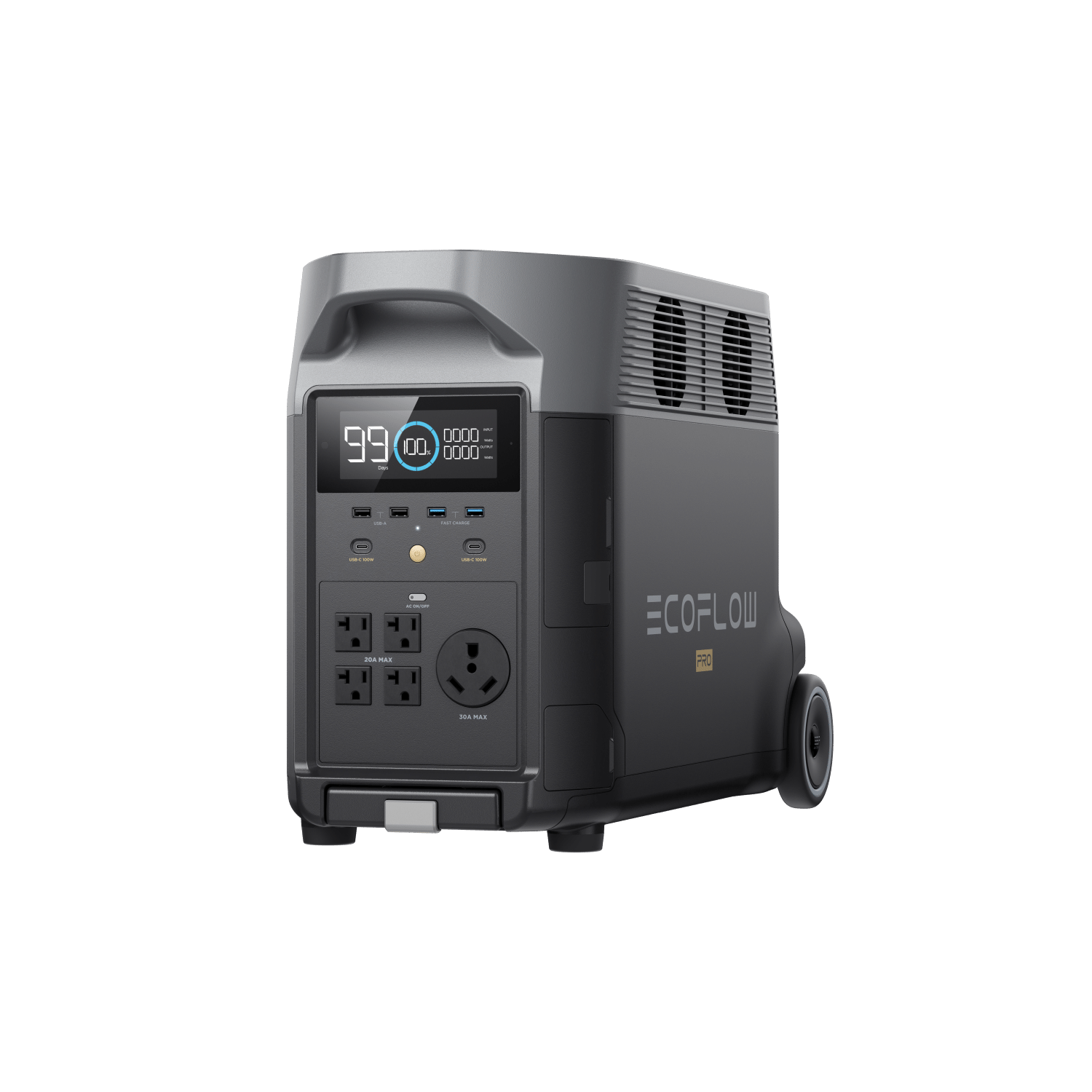 | 3,600 Wh | 3,600W | 1,600W | 45 kg | $2,799 | Check price |
Portable power station shortlist quick comparison
Best weekend fridge + fan station
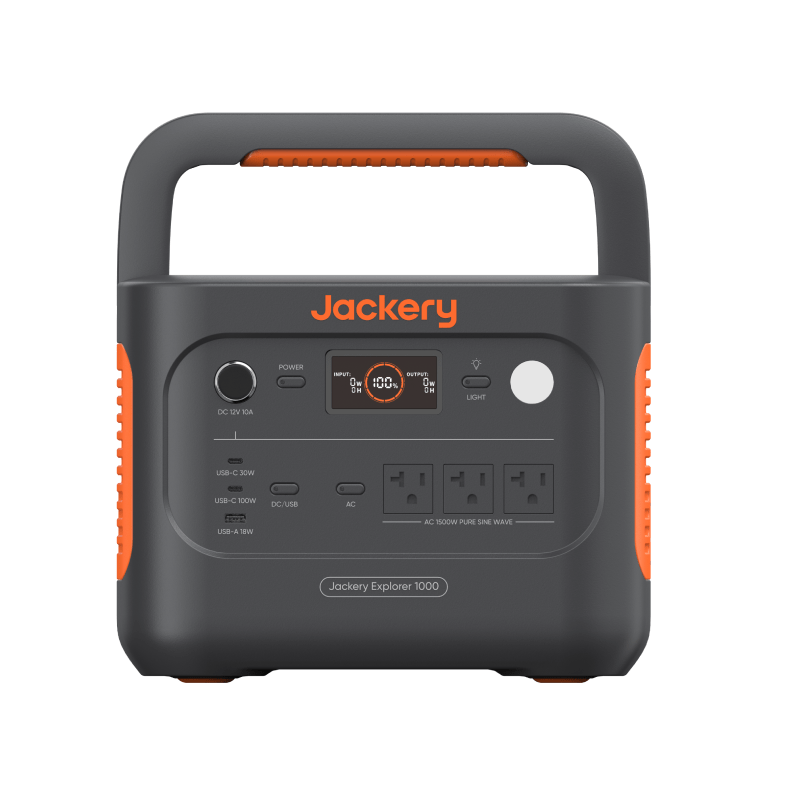
Jackery Explorer 1000 v2
$799
- Capacity
- 1,070 Wh
- AC out (cont.)
- 1,500W
- Solar in (max)
- 400W
- Weight
- 10.8 kg
Best mid station with the fastest recharge
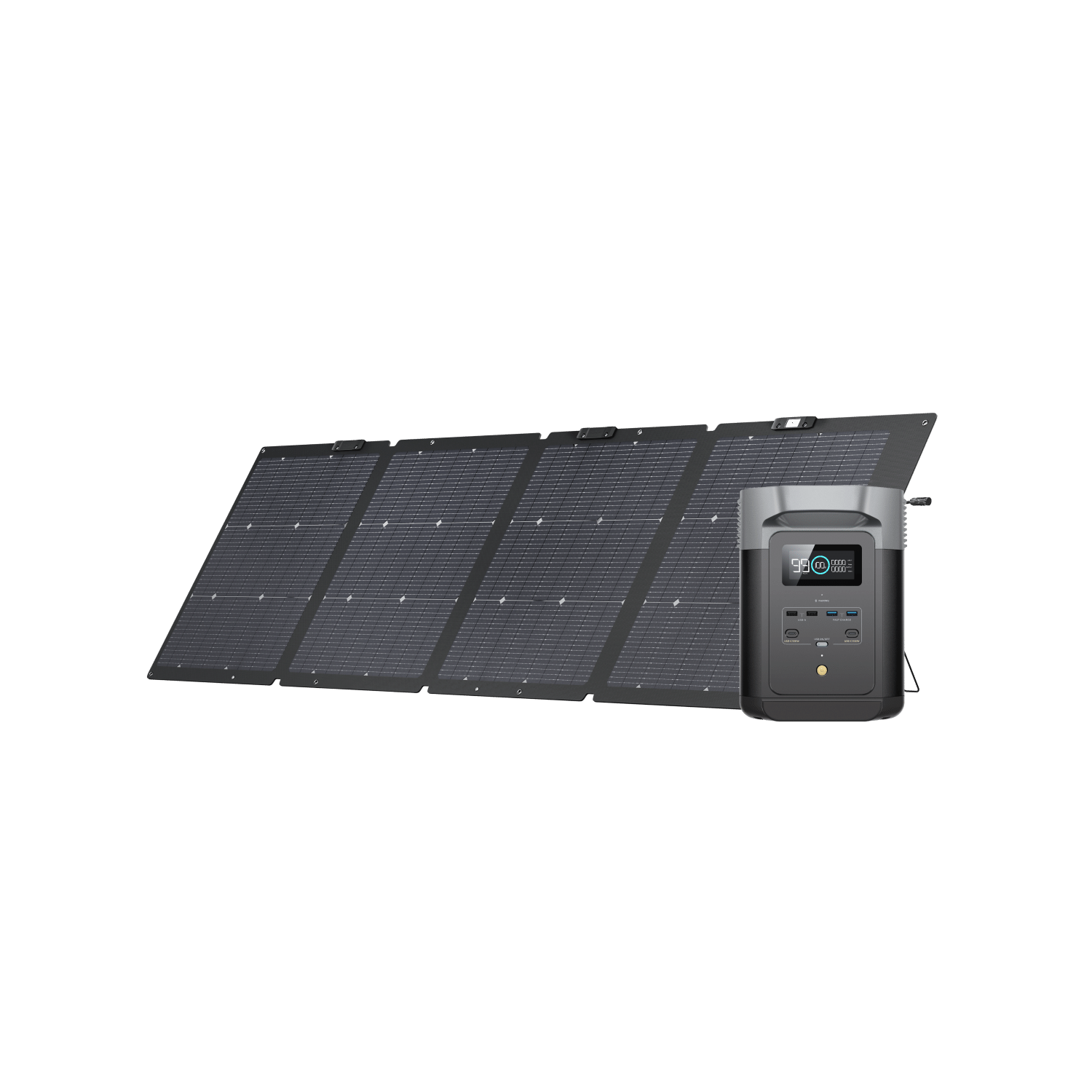
EcoFlow Delta 2
$899
- Capacity
- 1,024 Wh
- AC out (cont.)
- 1,800W
- Solar in (max)
- 500W
- Weight
- 12.0 kg
Best budget mid station
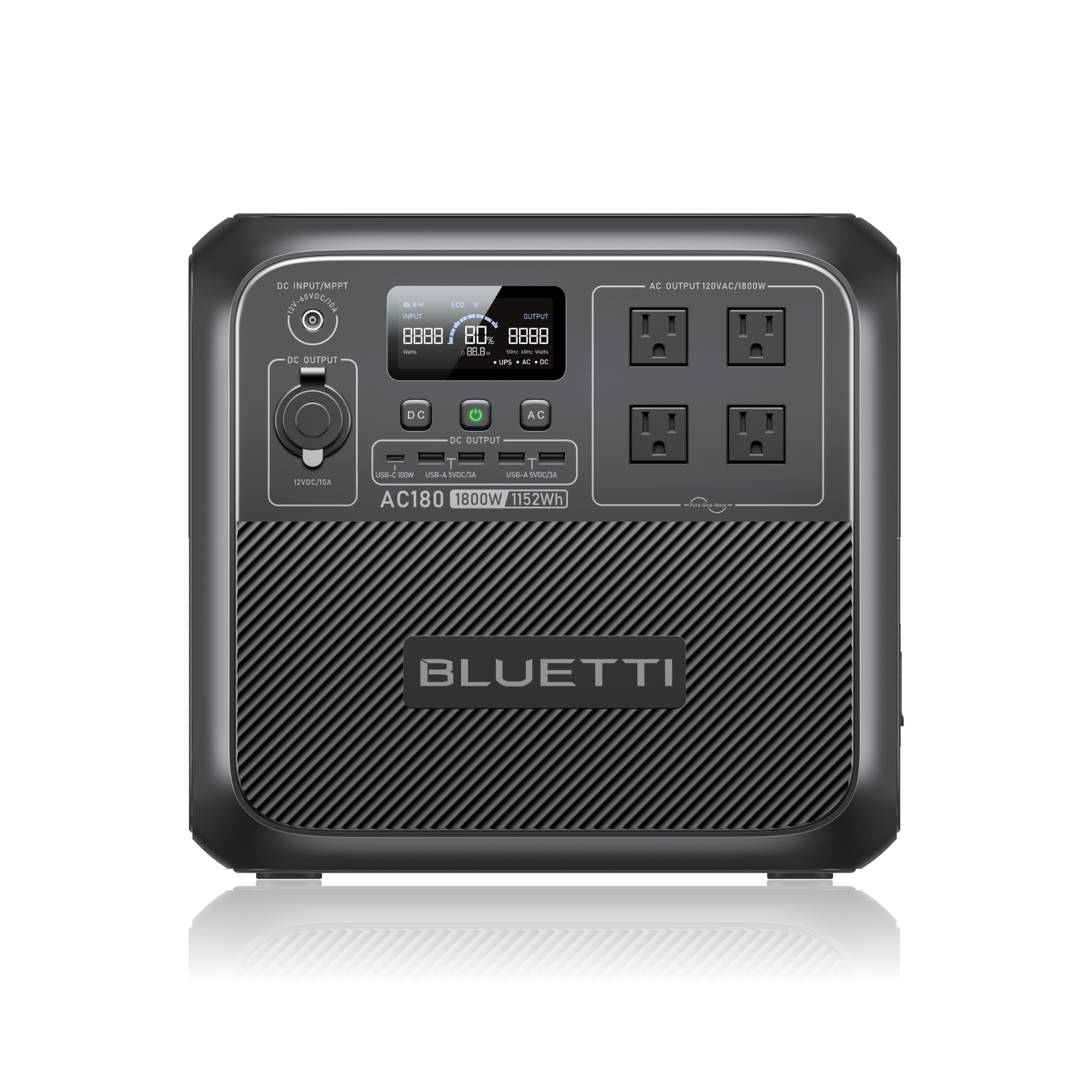
Bluetti AC180
$599-$799
- Capacity
- 1,152 Wh
- AC out (cont.)
- 1,800W
- Solar in (max)
- 200W
- Weight
- 16.0 kg
Best big station for week-long trips
EcoFlow Delta Pro
$2,799
- Capacity
- 3,600 Wh
- AC out (cont.)
- 3,600W
- Solar in (max)
- 1,600W
- Weight
- 45 kg
Capacities are gross watt-hours; usable energy is approximately 90 percent for the LFP units listed. Prices are US MSRP and frequently discount 15-30 percent on sale. Confirm current numbers on the manufacturer page before purchase.
Decision framework
Four questions decide which station you actually want. Work through them in order; answering them in any other order is the most common reason camping power buyers end up returning the first unit they pick.
Translate trip into watt-hours per day
- 60L 12V compressor fridge, 25C ambient
- 350 - 600 Wh/day
- Roof fan running 8 hours
- 120 - 200 Wh/day
- Laptop full charge
- 60 - 90 Wh each
- LED light string, 4 hours
- 20 - 40 Wh/day
The single number that decides which station you want is daily watt-hours. Most weekend setups land between 600 and 1,200 Wh per day once a fridge, a fan, lights, and a laptop are running. A 1,000-1,500 Wh station with 200W of solar will usually stay ahead of that load for two to three nights with one sunny day in between.
Marketed capacities are gross. LiFePO4 stations realistically deliver 90 to 95 percent of the rated number; older NMC chemistry units should be treated more like 80 percent usable. After that, take another 10-15 percent off for inverter losses if you run AC loads continuously. A 1,070 Wh LFP station gives roughly 800-900 Wh of trip energy in practice, not 1,070.
Match inverter ceiling to your loudest appliance
- Fridge + fan + laptop + lights
- Peaks 200-400W
- Drip coffee maker
- 800-1,500W
- Induction burner (single)
- 1,200-1,800W
- Hair dryer / electric kettle
- 1,200-1,800W
Continuous AC output is the steady-state limit. Surge output is the very short peak the inverter can deliver for two or three seconds. Drip coffee, hair dryers, induction burners, and microwaves all clip undersized inverters. The cheapest way to misbuy a power station is to size for average load rather than for the loudest appliance you will actually run.
A 700W inverter is enough for fridges, fans, and laptops indefinitely. A 1,500W inverter clears most one-appliance kitchen loads. A 1,800W-plus inverter clears most two-appliance loads (induction burner plus a fridge running simultaneously). The Jackery and EcoFlow X-Boost feature can briefly raise the apparent ceiling, but you cannot rely on it for sustained loads.
Plan the recharge before you plan the capacity
- 200W solar panel, sunny day
- 400-840 Wh delivered
- Cigarette socket (12V, 10A)
- ~100W in / 8 hr full refill
- DC-DC charger, 25A
- ~300W in / 3-4 hr full refill
- AC wall outlet, fast mode
- Most mid stations: 60-90 min
The right capacity depends on how fast it refills. If you spend nights at sites with AC hookups, a station that refills in under 90 minutes from a wall outlet lets you run a smaller battery harder. If you rely entirely on solar, oversize the battery so cloudy days do not break the trip; expect a 200W panel to deliver 400-840 Wh on a good day and 200-400 Wh on an average one.
Driving is the most reliable recharge for road-trip itineraries. A 12V cigarette socket caps near 100W of input on most stations. A wired DC-DC charger can push 300W or more into a compatible station and is the real reason long-trip overlanders rarely buy the biggest portable on the market - they let the alternator do the work.
Know when to skip the station and build a dual-battery system
- Daily draw above 2,000 Wh
- Dual-battery typically wins
- Trip length above 1 week
- Solar margin gets thin
- Permanent install acceptable
- Cost per Wh drops 40-60%
- Multi-vehicle use needed
- Stay portable
Portable power stations stop being the right answer past about 2,000 Wh of daily need or once a build becomes permanent. A LiFePO4 house battery with a DC-DC charger and a separately sized inverter costs significantly less per usable watt-hour and accepts much higher alternator recharge rates, but it lives in one vehicle and needs proper wiring. The lithium battery guide covers that path.
The most common mistake we see is buying a 3,000+ Wh portable for week-long van or truck trips. At that capacity the unit weighs 40+ kg, refills slowly from any single source, and costs more than a comparable dual-battery build. If the unit will never leave your vehicle, the dual-battery build is usually the better long-term answer.
The four picks
Each card below names what the station is best for, where it falls short, and what to pair with it. The buy buttons go to Amazon search so the listing always reflects today's price and availability; brand-direct links are included for the full spec sheet.
Best weekend fridge + fan station
Jackery Explorer 1000 v2
- Capacity 1,070 Wh (LFP)
- AC output 1,500W (2,250W X-Boost)
- Solar input (max) 400W, 11-32V
- AC recharge (0-80%) ~50 minutes
- Weight 10.8 kg / 23.8 lb
- Cycles to 80% 4,000
The Explorer 1000 v2 is the reference mid-size LFP station for weekend vehicle camping. It runs a 60L 12V fridge plus a fan plus a laptop for two nights, refills from a wall outlet to 80 percent in about 50 minutes (full charge takes longer as the curve tapers), and weighs little enough that one person can lift it into a vehicle without ceremony. The app is optional and the UI is the simplest in this tier.
Compared to the EcoFlow Delta 2 it gives up ~80W of solar input ceiling and ~300W of inverter continuous output. In return it weighs less, costs less out of pocket on sale, and runs a notably quieter fan profile under heavy load. For the camper whose loudest appliance is a coffee maker, this is the right answer.
What works
- Lightest mid-size LFP station - 10.8 kg lifts solo.
- Simple plug-and-play UI; no app required.
- 5-year warranty and strong US dealer presence.
What to weigh
- 1,500W AC ceiling clips most induction burners.
- 400W solar input is below EcoFlow Delta 2.
- Charges more conservatively in cold weather than NMC peers.
Skip if: You run a 1,500W+ continuous appliance, need >400W solar input, or want the fastest AC recharge in this tier.
Best mid with fastest recharge
EcoFlow Delta 2
- Capacity 1,024 Wh (LFP, expandable to 3,072 Wh)
- AC output 1,800W (2,700W X-Boost)
- Solar input (max) 500W, 11-60V
- AC recharge (0-80%) ~50 minutes
- Weight 12 kg / 27 lb
- Cycles to 80% 3,000
The Delta 2 is the right answer when overnight shore-power refills matter or when you need to occasionally clip a 1,500-1,800W appliance. AC recharge hits 80 percent in roughly 50 minutes and 100 percent in about 80 minutes, which is unusually fast at this price tier. The solar input ceiling at 500W means a 400W roof panel will actually deliver close to its rating in good sun.
Two real trade-offs vs the Jackery: cycle life is 3,000 cycles to 80 percent (vs Jackery's 4,000), and the AC fan profile is noticeably louder under heavy charge or load. EcoFlow's app is good but the unit is fully usable without it. The expansion battery is a useful path if you outgrow 1,000 Wh later.
What works
- Fastest AC recharge in the mid tier.
- 500W solar input ceiling and broad MPPT range.
- Expandable to ~3 kWh with an add-on battery later.
What to weigh
- AC fan is loud under heavy charge or load.
- 3,000-cycle rating is lower than Jackery and Bluetti.
- Slightly heavier than the Jackery Explorer 1000 v2.
Skip if: You camp far from any shore power and would never benefit from fast AC recharge.
Best budget mid station
Bluetti AC180
- Capacity 1,152 Wh (LFP)
- AC output 1,800W (2,700W Power Lifting)
- Solar input (max) 200W, 12-60V
- AC recharge (turbo) ~45 minutes to 80%
- Weight 16 kg / 35 lb
- Cycles to 80% 3,500
The AC180 is the easiest answer when watt-hours per dollar is the priority. It frequently sits at the lowest sale price of any 1,000+ Wh LFP station, ships with the same 5-year warranty as the Jackery and EcoFlow, and uses Bluetti's 1,800W inverter with surge handling for short kitchen loads.
Two real compromises: solar input caps at 200W (well below the Jackery and EcoFlow), and the unit is heavier at 16 kg. Bluetti's app is fine but not as polished as EcoFlow's, and US warranty fulfilment is slightly slower than the other two brands by owner reports. None of that is a deal-breaker if budget is the constraint.
What works
- Best price per usable watt-hour in this shortlist.
- Largest capacity of the three mid picks (1,152 Wh).
- Same 5-year warranty as the Jackery and EcoFlow.
What to weigh
- 200W solar input ceiling limits panel sizing.
- Heavier than the Jackery (16 vs 10.8 kg).
- Slower US warranty fulfilment per owner reports.
Skip if: You need fast solar input, the lightest unit, or live somewhere Bluetti dealer support is limited.
Best big station for week-long trips and partial home backup
EcoFlow Delta Pro
- Capacity 3,600 Wh (LFP, expandable to 25 kWh)
- AC output 3,600W (4,500W X-Boost, 7,200W surge)
- Solar input (max) 1,600W, 11-150V
- AC recharge ~80 minutes to 80%
- Weight 45 kg / 99 lb
- Cycles to 80% 3,500
The Delta Pro is the answer when you need to run a fridge, lights, fan, laptop, and an induction burner or microwave for a week without shore power, or when the station has to double as partial home backup. 3,600 Wh covers most week-long fridge-and-cooking trips with a single 400-600W solar deployment, and the 3,600W inverter clears any single common kitchen appliance.
It is 45 kg, which means it lives in one vehicle and one person can move it on wheels but not lift it solo into an SUV. At this capacity the honest question is whether a dual-battery LiFePO4 build would be the better long-term answer, because permanent installs are cheaper per usable Wh and recharge from the alternator at much higher rates. The Delta Pro wins when you actually need portability and partial home backup; otherwise the lithium battery guide is the better starting point.
What works
- Runs most kitchen appliances continuously, not just briefly.
- Highest solar input ceiling in the consumer market.
- Doubles as a home-backup unit during outages.
What to weigh
- 45 kg is wheel-and-ramp territory, not carry territory.
- Slow AC recharge for the capacity (80 min to 80%).
- At this size, a dual-battery LFP build is often cheaper.
Skip if: The station will live permanently in one vehicle; a dual-battery LiFePO4 build is usually cheaper per usable Wh and recharges faster from the alternator.
The obvious cross-shop at this capacity is the Jackery HomePower 3000, which carries 3,072 Wh at 59.52 lb against the Delta Pro's 3,600 Wh at 99 lb, and takes no expansion batteries where the Delta Pro stacks to 25 kWh. We have not tested either unit - the full spec analysis of the HomePower 3000 turns its published capacity into runtime in days and names what a specification sheet cannot answer.
Hidden costs to plan for
The station itself is only part of the spend. Plan for the recharge gear and the small accessories that make a portable system actually usable on a trip.
- Solar panel: $250-$700 for a quality 200W folding or roof panel. Lower-cost panels often underperform their rating in real-world conditions.
- Long-run solar extension cable: $20-$40. The 3-5 m cable in the box is rarely long enough to chase sun around camp.
- DC-DC charger (for vehicles you drive a lot): $180-$320 for the charger plus $40-$80 for fusing and short runs of 8 AWG wire.
- 12V fridge adapter: $15-$25 for an Anderson Powerpole or XT60 cable that bypasses the cigarette socket and reduces voltage sag.
- Insulated weather sleeve or hard case: $40-$120 for protection against rain, dust, and accidental knocks at camp.
Using a camping station for a home outage
The same units get bought for two jobs, and the second one catches people out. A station sized comfortably for a weekend with a 12V fridge behaves differently when the grid drops. Three things change.
- There is no solar recharge. Camping sizing assumes the panel is deployed and the sun comes up. In an outage the panel is usually in the garage, and outages often arrive with the weather that removes the sun anyway. Plan the whole event on stored capacity, which typically means one band larger than the camping answer for the same appliance list.
- A domestic fridge surges on compressor start. A household fridge that runs at 100-150 W draws several times that for the fraction of a second the compressor kicks in. Check the station's surge or peak rating, not just its continuous output. A 12V camping fridge does not have this problem to the same degree, which is exactly why the camping spec sheet can mislead here.
- It is not medical-device backup. A CPAP, an oxygen concentrator, or refrigerated medication needs backup planned to the device manufacturer's own guidance, with the runtime and switchover behaviour that manufacturer specifies. A camping power station is not a substitute for that, and we are not equipped to tell you it is.
To put numbers on it, the calculator has an outage mode that reports hours of coverage rather than nights: size a station for an outage load set. Whole-house backup, transfer switches, and standby generators are a different product category and a different site.
What we deliberately left off
Three categories of station consistently show up in best-of lists and are missing here on purpose:
- NMC-chemistry budget stations. Cycle life is too short for serious camping use, and the calendar-aging penalty is steep.
- Off-brand Amazon stations. The headline price often beats Bluetti but warranty fulfilment, replacement-cell sourcing, and BMS quality are inconsistent enough that we cannot recommend them for a multi-year unit.
- Stations above 5 kWh in a single box. At that capacity the math almost always favours a dedicated lithium house battery build with a DC-DC charger and a separately sized inverter.
Best next step
Once you have a station picked, the highest-value next move is to verify your capacity choice against your actual appliance list. The sizing calculator does that in 60 seconds and tells you whether you are buying one tier too small or too big.
- Choosing between brands? Read the Jackery vs EcoFlow vs Bluetti breakdown. We compare the three at each common capacity tier.
- Considering a permanent install? The lithium battery guide covers LiFePO4 banks, dual-battery wiring, and DC-DC chargers.
- Running fans or devices overnight? The sleep setup guide shows when airflow, bedding, and window covers reduce the power you need.
- Just added a rooftop tent? The rooftop tents hub covers the sleep platform that usually drives the fridge-and-fan power decision.
Frequently asked questions
Why don't you declare a single 'best overall' power station?
What size power station do I need for camping?
Is Jackery, EcoFlow, or Bluetti the best brand?
Are portable power stations safe to leave running overnight in a tent?
Can a 200W solar panel keep a 12V fridge running indefinitely?
How long do portable power stations last over the years?
How we wrote this
A synthesis guide, not a hands-on review
This guide is a synthesis shortlist. Numbers come from manufacturer specs, the independent reviews cited at the end of this page, and recurring real-world patterns in owner forums. We have not yet completed first-hand fridge, fan, and laptop runtime testing on every unit in this guide, so we group by use case rather than declaring a single 'best overall.' Affiliate links go to Amazon search results so prices stay current; we earn a commission when you buy, never at extra cost to you.
We have not field-tested every product mentioned. Where we describe a product we are synthesizing manufacturer specifications, independent expert reviews, and verified user feedback from forums. Sections will be replaced with first-hand notes once testing is complete. Read our full methodology.
References
Sources synthesized to write this guide. Manufacturer pages cite specifications; independent publications and forums cite real-world performance and failure patterns.
-
Manufacturer source for capacity, AC inverter rating, recharge rates, and chemistry.
-
Reference for the 3,000 Wh capacity tier used in the big-station discussion.
-
Manufacturer source for X-Boost behavior, AC recharge time, and solar input ceiling.
-
Large-capacity station spec sheet for the week-long base-camp pick.
-
Mid-tier LFP power station with 1,152 Wh capacity and turbo-charge mode.
-
Big-station LFP option with expandable battery support, cross-referenced in this guide.
-
Independent editorial review covering Jackery, EcoFlow, Bluetti, and Anker models across price tiers.
-
Long-form independent reviews used for chemistry, BMS behavior, and solar input behavior.
-
Lab-tested capacity delivery and inverter surge behavior data.
-
Owner-reported real-world runtime patterns and long-term reliability signals.