Disclosure: Some links on this page are affiliate links. Commissions never change our recommendations. Read the full disclosure.
Last updated
Reviewed May 18, 2026How we picked
A 12V fridge has to clear four gates: it has to actually cool to 4 C in real ambient heat (not just on a brand's marketing chart), it has to draw a manageable amount of power against your battery plan, the compressor has to be from a reputable manufacturer because compressors are the part that breaks at year 6-10, and the build has to survive vehicle vibration and dust on rougher trips.
That is why this guide does not rank fridges by capacity alone. A 65 quart fridge with poor insulation draws more power than a well-insulated 45 quart at the same setpoint - and most vehicle campers run out of space at the battery, not the fridge. Sizing the fridge to the battery is the right framing; the capacity is the secondary decision.
| Product | Capacity | Avg amp draw | Best for | Price | Main tradeoff | Where to buy |
|---|---|---|---|---|---|---|
| | 45 quart / 60 cans | 0.7-2.4 A at 12V | Van and truck camper builds | $899-$1,049 | Premium price; app features are nice but not essential | Check price |
| | 45 quart / 60 cans | 0.7-2.0 A at 12V | Same compressor class as Dometic for less | $439-$549 | Less polished UI; thinner insulation than Dometic | Check price |
| | 47 quart split into fridge + freezer | 1.0-3.0 A at 12V | Overlanders wanting separate freezer and fridge zones | $1,200-$1,449 | Significant price; weight is real | Check price |
| | 45 quart / 60 cans | 0.8-2.8 A at 12V | Weekend campers retiring the ice cooler | $399-$499 | Older compressor design; less efficient at high ambients | Check price |
12V fridge picks compared
Best premium 12V fridge
Dometic CFX3 45
$899-$1,049
- Capacity
- 45 quart / 60 cans
- Avg amp draw
- 0.7-2.4 A at 12V
- Best for
- Van and truck camper builds
- Main tradeoff
- Premium price; app features are nice but not essential
Best value 12V fridge
ICECO VL45 ProS
$439-$549
- Capacity
- 45 quart / 60 cans
- Avg amp draw
- 0.7-2.0 A at 12V
- Best for
- Same compressor class as Dometic for less
- Main tradeoff
- Less polished UI; thinner insulation than Dometic
Best dual-zone 12V fridge
ARB Zero Fridge Freezer 47 quart
$1,200-$1,449
- Capacity
- 47 quart split into fridge + freezer
- Avg amp draw
- 1.0-3.0 A at 12V
- Best for
- Overlanders wanting separate freezer and fridge zones
- Main tradeoff
- Significant price; weight is real
Best budget 12V fridge
Whynter FM-45G
$399-$499
- Capacity
- 45 quart / 60 cans
- Avg amp draw
- 0.8-2.8 A at 12V
- Best for
- Weekend campers retiring the ice cooler
- Main tradeoff
- Older compressor design; less efficient at high ambients
Top picks
Best premium 12V fridge
Dometic CFX3 45
- Best fit Van builds, truck campers, premium overland setups
- Amp draw 0.7-2.4 A at 12V (cool ambient to high ambient)
- Ext. dimensions About 27 x 16 x 18 in - fits most cargo areas
The Dometic CFX3 45 is the reference compressor fridge because Dometic refined the formula across two product generations. The CFX3-series compressor (a Secop BD35F-class unit) is the same compressor architecture used in marine fridges with 15+ year service histories. The CoolDistance app shows temperature trends and battery voltage; the LCD display is the cleanest UI in the category.
The case against it is price. At $950 it is roughly $400-500 more than the ICECO VL45 with similar performance in the lab. The polished UI, better insulation, and Dometic service network arguably justify the spread for buyers planning to use the fridge 100+ nights a year; for occasional campers, the ICECO is the more economical pick.
What works
- Premium build quality and refined UI
- Secop-class compressor with strong reliability data
- Insulation is thicker than budget alternatives
- Dometic service network is broad
What to weigh
- Premium price
- App features are nice but rarely essential
- Latches are plastic - inspect after rough trips
Skip if: You camp occasionally or budget is tight - the ICECO VL45 delivers similar performance for less money.
Best value 12V fridge
ICECO VL45 ProS
- Best fit Best value pick; weekend and multi-week vehicle campers
- Amp draw 0.7-2.0 A at 12V
- Ext. dimensions About 27 x 16 x 17 in
The ICECO VL45 ProS is the fridge ICECO built to compete directly with the Dometic CFX3 line, and it largely succeeds. The Secop BD35F compressor is the same class as Dometic's, the insulation is competitive (slightly thinner), and the basic LCD UI covers everything you actually need without the app overhead. At roughly half the Dometic price, this is the fridge most vehicle campers should buy.
What you give up is polish. The UI is more utilitarian, the latches feel less premium, and ICECO's service network is smaller than Dometic's. Owner reports on r/Overlanding and r/Vanlife are consistently positive on the VL45 ProS for the price point, with the standard caveat that any 12V fridge can fail and the owner experience after a failure varies more than the spec sheet suggests.
What works
- Same compressor class as Dometic for half the price
- Stainless interior is easier to clean than ABS plastic
- Heavy-duty latches and corner brackets
- ICECO direct support is responsive
What to weigh
- Less premium UI than Dometic
- Insulation is slightly thinner; amp draw is marginally higher at high ambient
- Smaller US service network than Dometic
Skip if: You want the absolute best UI and service network - the Dometic CFX3 wins on those at the higher price.
Best dual-zone 12V fridge
ARB Zero Fridge Freezer 47 quart
- Best fit Overland trips, family camping wanting ice cream, multi-week off-grid use
- Amp draw 1.0-3.0 A at 12V (both zones running)
- Construction Stainless steel exterior; thick insulation; vibration-rated for trail use
The ARB Zero 47 dual-zone is the fridge for buyers whose trip pattern actually needs separate fridge and freezer compartments - long overland trips with frozen meat, family camping with ice cream, fishing or hunting trips that need ice for the catch on the way home. The split is roughly 60/40 fridge/freezer, with adjustable temperature for each zone independently.
Two real considerations. The price is real: $1,300 puts it in serious-RV territory, and a fridge running a dedicated freezer zone draws more amps than a single-zone equivalent because the compressor cycles harder to hold the colder setpoint. And the dual-zone form factor is taller than single-zone 45 quart fridges, which matters for under-bed installations in vans. For the right buyer it is the best fridge in the category; for everyone else the ICECO VL45 single-zone is more flexible.
What works
- Genuine fridge + freezer dual-zone with independent controls
- ARB build quality is overland-grade
- Stainless steel exterior tolerates dust and trail abuse
- Higher capacity than equivalent single-zone units
What to weigh
- Significant price
- Higher amp draw with both zones active
- Taller form factor can complicate van installs
Skip if: You do not need a freezer - the ICECO VL45 or Dometic CFX3 single-zone covers fridge-only use for less money.
Best budget 12V fridge
Whynter FM-45G
- Best fit Weekend campers retiring an ice cooler; budget-first vehicle builds
- Amp draw 0.8-2.8 A at 12V
- Compressor Older compressor design (not Secop-class); functional but less efficient
The Whynter FM-45G is the budget pick that has been on this list for years because it works. The compressor is an older design (not the Secop / Danfoss BD35F that powers premium fridges), the insulation is thinner than premium options, and the UI is utilitarian. But it cools to 4 C reliably, it tolerates 12V operation off a power station, and at $450 it is the cheapest reasonable way to retire an ice cooler.
The honest counter-argument is amp draw. At high ambient temperatures (38 C+) the Whynter pulls noticeably more power than the ICECO VL45 or Dometic CFX3 because its compressor is less efficient. For weekend campers in moderate climates this is irrelevant; for multi-week trips in hot weather the better-insulated fridges pay for themselves in battery savings.
What works
- Cheapest reasonable 12V fridge
- Reliable at moderate ambient temperatures
- AC or 12V operation - flexible for home pre-cool
- Widely available
What to weigh
- Older compressor design - less efficient at high heat
- Thinner insulation than premium options
- UI is utilitarian; no app or trend logging
Skip if: You camp regularly in hot weather (38 C+) or you want premium-tier reliability - the ICECO VL45 is the better value pick once the gap is real.
The power station math that decides everything
A 12V fridge is a power-system component, not a kitchen appliance. Average daily energy is 200-450 Wh in cool weather, 400-700 Wh in hot weather. A 500 Wh portable power station runs a 45 quart fridge for 1-2 days; a 1,000 Wh station runs 2-3 days. For longer trips you either need a larger station, a permanent house battery (LiFePO4 100 Ah holds about 1,200 Wh usable), or active recharge from solar panels or vehicle alternator.
The honest assessment: if your trip is longer than 3 nights, plan for active recharge. 100 W of solar replaces 300-500 Wh per day in full sun, which roughly covers a 12V fridge's daily draw on its own. Alternator charging via a DC-DC charger pushes the typical 20-40A consumer unit into a 240-480 Wh-per-hour replenishment band at 12 V, rising into the 600-700 Wh range for premium 60A installs - enough to top up a fridge plus phones and lights with an hour or two of daily driving. Run the math on the power station sizing calculator before buying the fridge, not after.
When to retire the ice cooler
The break-even between an ice cooler and a 12V fridge happens at about 4 nights per trip and 15+ trips per year. Below that, ice is cheaper - a 50 quart Yeti hard cooler plus $5-10 of ice per refill is dramatically less than a $450 fridge plus $300 power station. Above that, the fridge wins on price-per-cold-hour because ice management becomes a daily chore.
The other reason to upgrade is reliability of cold. A fridge holds 4 C regardless of how often you open it, whether you remembered to drain melt water, or how hot the ambient is. A cooler at hour 36 in a 95 F parking lot is at 50 F regardless of how well you packed it. For multi-day food safety, that gap matters.
How the fridge fits the whole system
A 12V fridge sits between the power and kitchen hubs because it is really a power decision wrapped in a kitchen form factor. For battery sizing, see the best portable power station guide or the lithium battery for RV guide for permanent house power. For the cooler-side comparison, the best backpack cooler guide covers when a soft cooler is the right tool instead.
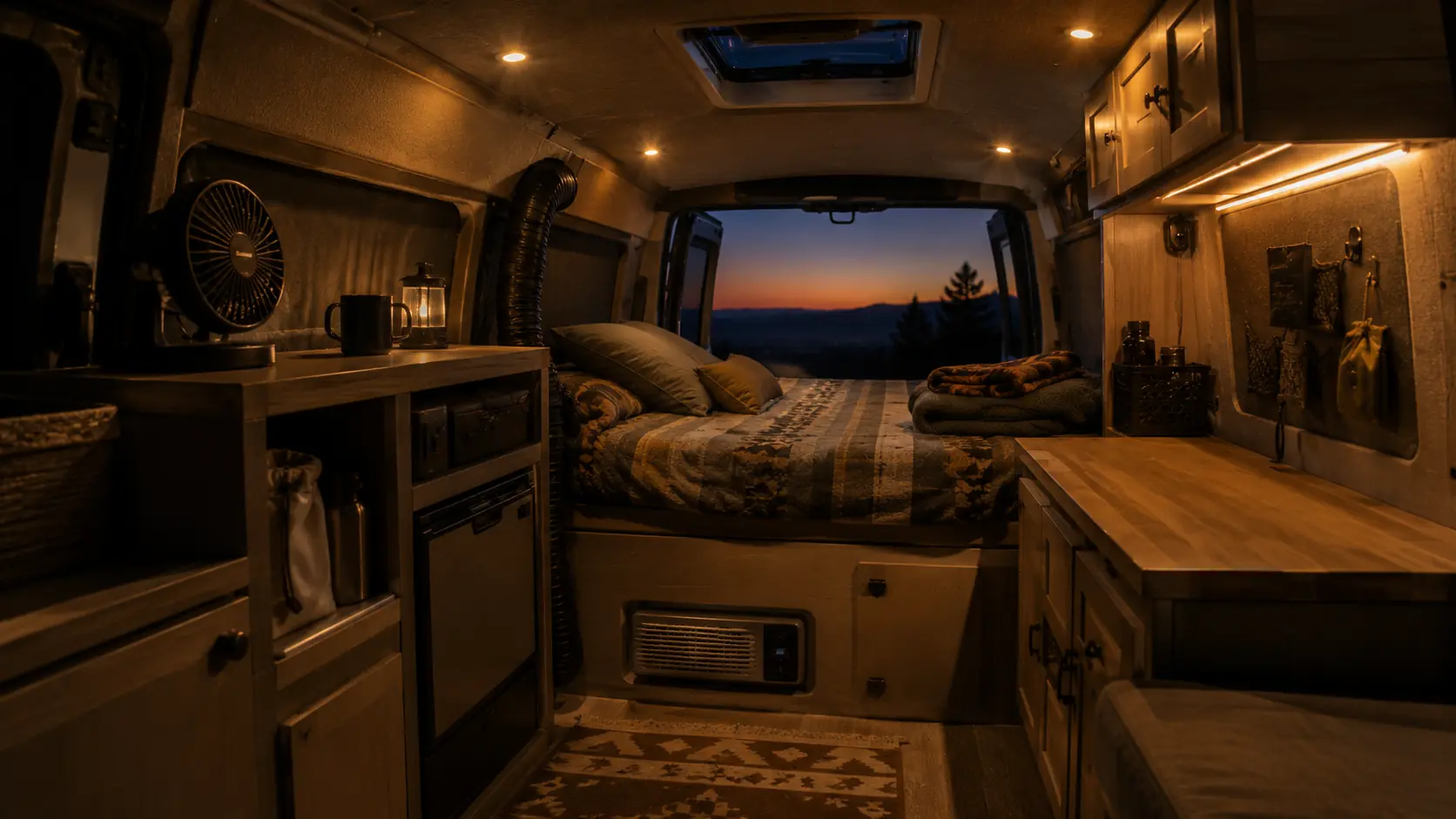
Heat management matters for any 12V fridge installed inside a closed vehicle. A camping fan that pushes hot air past the fridge condenser can lower amp draw by 10-20 percent at high ambients - see the camping fan guide for the small DC fan that does this for under $50.
What to buy first
For most buyers, the ICECO VL45 ProS is the right first 12V fridge. You get a Secop-class compressor, real 45 quart capacity, and reliable cooldown for half the Dometic price. Upgrade to the Dometic CFX3 only if the UI polish and service network matter to you (commercial use, family setups where multiple people read the LCD). The ARB Zero dual-zone is a specific buy for overlanders who actually use both zones; the Whynter FM-45G is the right pick for budget-first weekend setups where amp-draw efficiency is secondary.
Frequently asked questions
How much power does a 12V camping fridge use?
Compressor vs thermoelectric (Peltier) fridges - which is better?
Do I need dual-zone for camping?
Can I run a 12V fridge directly off my vehicle's battery?
How fast does a 12V fridge cool down?
How we wrote this
A synthesis guide, not a hands-on review
This is a synthesis shortlist. We compare published specs, independent reviews, and recurring owner reports; we have not yet completed first-hand multi-month testing on every fridge listed. Amp draw numbers below are manufacturer specs at 25-32 C (77-90 F) ambient - real-world draw at 38 C+ in a hot vehicle is typically 30-50 percent higher. Affiliate links go to Amazon search results so prices stay current. We earn a commission when you buy, never at extra cost to you.
We have not field-tested every product mentioned. Where we describe a product we are synthesizing manufacturer specifications, independent expert reviews, and verified user feedback from forums. Sections will be replaced with first-hand notes once testing is complete. Read our full methodology.
References
Sources synthesized to write this guide. Manufacturer pages cite specifications; independent publications and forums cite real-world performance and failure patterns.
-
Manufacturer source for the reference mid-size compressor fridge: capacity, amp draw, and Wi-Fi app features.
-
Manufacturer source for the value-tier 45 quart fridge with the same SECOP/Danfoss compressor as premium options.
-
Manufacturer source for the overland-tough dual-zone fridge with separate fridge and freezer compartments.
-
Manufacturer source for the budget 45 quart fridge that anchors the entry-tier price point.
-
Industry reference for the compressor that powers most premium 12V fridges - matters for owner-side service and longevity expectations.
-
Independent testing used for amp-draw verification and cooldown-time benchmarks across the format.
-
Owner-reported long-term reliability, latch failures, and altitude derating signals used for failure-mode framing.
-
Public reference on energy efficiency claims - relevant because 12V fridge brands quote amp draw at different ambient temperatures.