Disclosure: Some links on this page are affiliate links. Commissions never change our recommendations. Read the full disclosure.
Last updated
Reviewed May 18, 2026How we picked
A camp stove has to clear five gates: it must put out enough heat for the pans you actually use, hold a flame in real wind, sit stable on uneven ground, run on fuel you can resupply, and pack into a footprint you can live with in your vehicle. The right format is the one whose constraints match how you actually camp.
That is why this guide does not rank every stove by star rating. A premium two-burner is wrong for a solo coffee trip; a backpacking canister stove is wrong for cooking family dinners; a wood stove is wrong outside a hot-tent or open shelter; an induction burner is wrong without battery to feed it.
| Product | Format | BTU / power | Best for | Price | Main tradeoff | Where to buy |
|---|---|---|---|---|---|---|
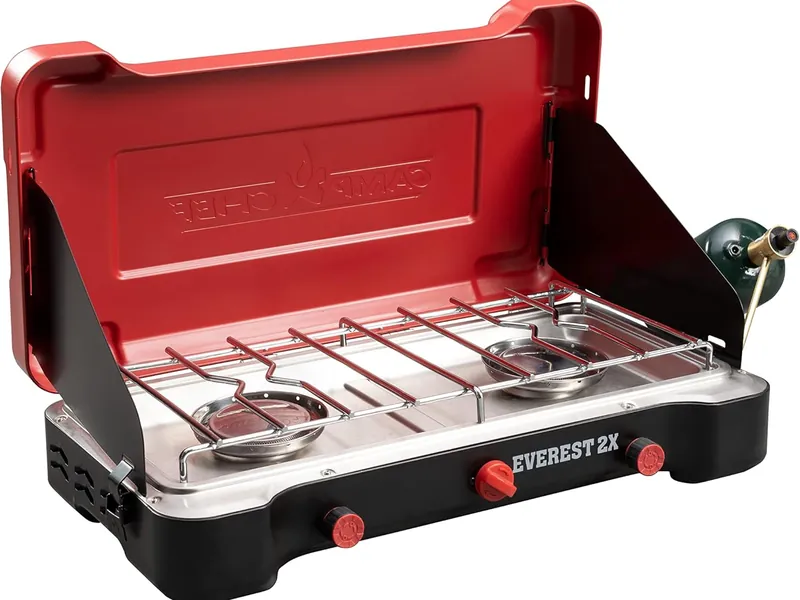 | Two-burner propane | 20,000 BTU per burner | Couples / families at camp | $170-$200 | Briefcase-sized to pack | Check price |
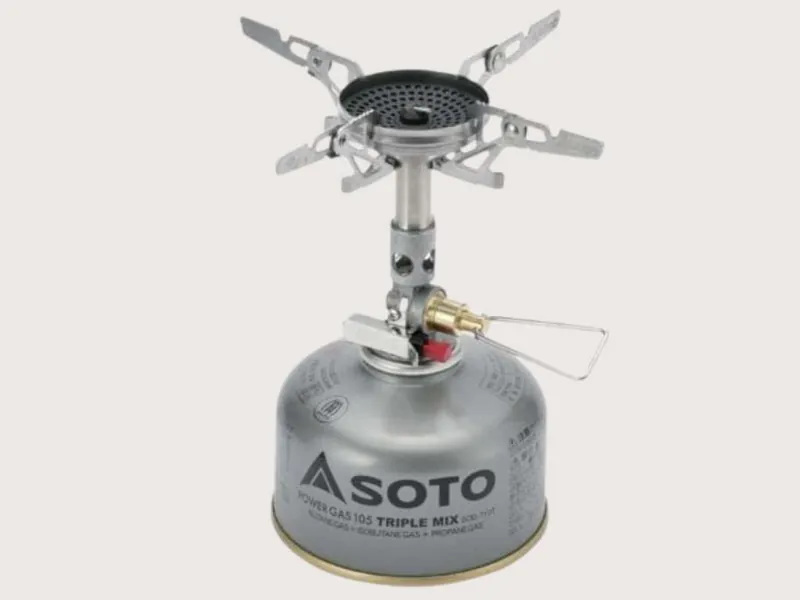 | Single-burner canister | 11,000 BTU | Solo trips and coffee duty | $80-$95 | Single-pan only | Check price |
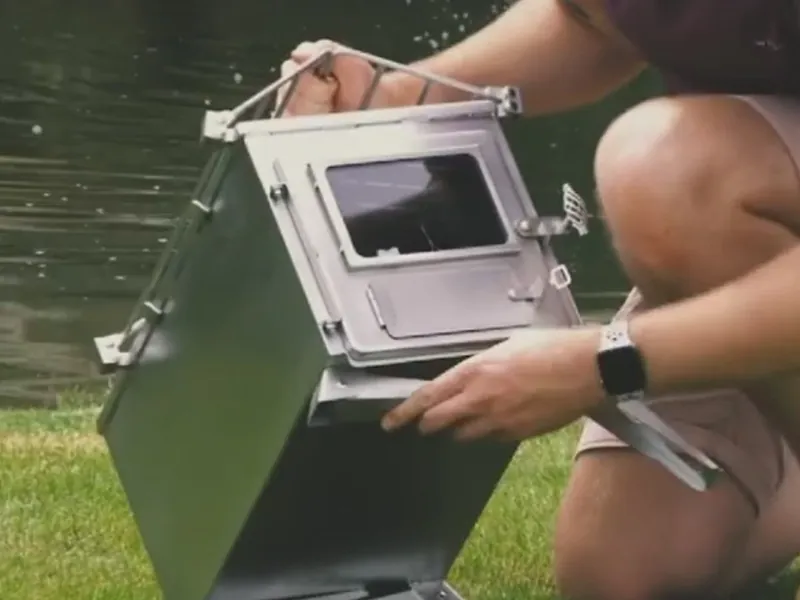 | Wood / hot-tent stove | Wood-fired heat output | Cold-weather basecamp | $350-$420 | Needs a hot-tent or open shelter | Check price |
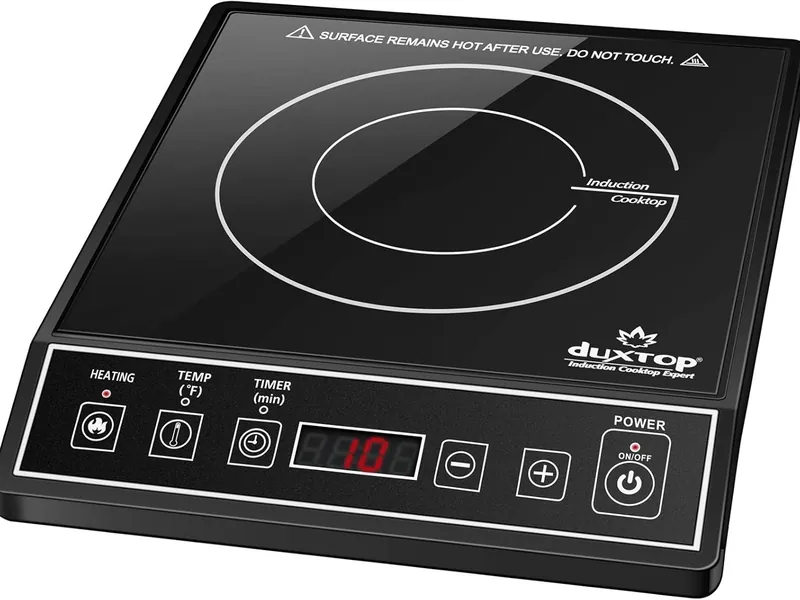 | Electric induction | 1800W (200-1800W range) | Power-station setups | $70-$95 | Drains batteries fast at full output | Check price |
Camping stove picks compared
Best two-burner propane stove
Camp Chef Everest 2X
$170-$200
- Format
- Two-burner propane
- BTU / power
- 20,000 BTU per burner
- Best for
- Couples / families at camp
- Main tradeoff
- Briefcase-sized to pack
Best single-burner canister stove
Soto WindMaster
$80-$95
- Format
- Single-burner canister
- BTU / power
- 11,000 BTU
- Best for
- Solo trips and coffee duty
- Main tradeoff
- Single-pan only
Best wood / hot-tent stove
Winnerwell Nomad Medium
$350-$420
- Format
- Wood / hot-tent stove
- BTU / power
- Wood-fired heat output
- Best for
- Cold-weather basecamp
- Main tradeoff
- Needs a hot-tent or open shelter
Best portable induction cooktop
Duxtop 1800W Portable Induction
$70-$95
- Format
- Electric induction
- BTU / power
- 1800W (200-1800W range)
- Best for
- Power-station setups
- Main tradeoff
- Drains batteries fast at full output
Top picks
Format 1 of 4 · Two-burner propane
Two-burner propane: the default vehicle-camping format
This is what most vehicle campers should buy, and it is the format that lets you simmer coffee while frying eggs. The representative pick is the Camp Chef Everest 2X at 20,000 BTU per burner, 12 lb, and $229.99 at the manufacturer's list price - a stove whose folding lid forms its own three-sided windscreen.
Because two-burner stoves are most of what people actually buy, they get a page of their own rather than one card here: two-burner stoves compared head to head puts the Camp Chef against the Coleman Cascade 222 and the GSI Selkirk 540+ on wind, simmer control, packed dimensions, and the propane cost arithmetic that decides whether you should be running 1 lb canisters at all.
Best single-burner canister stove
Soto WindMaster
- Best fit Solo trips, coffee duty, backup cooking
- BTU 11,000 BTU
- Weight About 3 oz; folds inside a small pot
The Soto WindMaster is the canister stove for people who care about it staying lit. The burner head is recessed below the pot supports, which is the only design that genuinely tolerates a side breeze without a separate windscreen. It is the stove most thru-hiker forums quietly recommend over the more famous MSR and Jetboil alternatives.
Pair it with the TriFlex four-prong pot stand for stability with two-cup pots; the standard three-prong version is fine for one pot and gets tippy with anything wider.
What works
- Best wind tolerance in its class
- Strong simmer control
- Light enough to also use backpacking
- Reliable piezo igniter
What to weigh
- Single pan only
- Needs iso-butane canisters (resupply in towns can be patchy)
- Tippy with wide pots on the standard stand
Skip if: You cook for more than two people or need to run two pans at once.
Best wood / hot-tent stove
Winnerwell Nomad Medium
- Best fit Cold-weather basecamp and hot-tent setups
- Firebox Medium - fits a few logs at a time
- Pack size Chimney sections nest inside the firebox
The Winnerwell Nomad Medium is the easiest entry to wood-fired camp cooking because the chimney sections pack inside the firebox, the legs fold flat, and the flat top doubles as a real cooking surface. It is most often paired with a Pomoly or OneTigris hot tent for late shoulder-season basecamps.
Treat this as a heat + cook combination, not a primary kitchen. You do not use a wood stove for fast coffee or a quick dinner; you use it for slow-cooked meals when you also want the tent warm. Never run a wood stove inside a closed vehicle - this is a hot-tent and open-awning device only.
What works
- Heat and cook in one device
- Flat cooking surface
- Chimney sections nest inside for transport
- Long lifespan in stainless
What to weigh
- Needs a hot-tent or open shelter
- Slow to ramp from cold start
- Banned in fire-restriction periods
- Heavier than the other picks at about 23 lb
Skip if: You camp in fire bans, summer-only, or without a tent that accepts a stove jack.
Best portable induction cooktop
Duxtop 1800W Portable Induction
- Best fit Power-station setups, awning kitchens
- Power range 200-1800W in 10 steps
- Pack size Flat slab, about 6 lb
The Duxtop is the budget gateway to flame-free camp cooking from a power station. It is the same form factor as a kitchen induction burner with the same precision controls; the difference for camp use is that it draws 1800W at full output, which will drain a 1000Wh power station in about 30 minutes.
Pair it with a 2 kWh+ station (EcoFlow Delta 2, Jackery 2000, Bluetti AC180) and a magnetic-base pan. Skinny aluminum pans will not work; the cookware needs to be ferrous (magnet sticks). The natural cross-link is to the off-grid power hub's mid-tier station picks.
What works
- No flame, no exhaust - safe under awnings
- Precise temperature control
- Cheap and compact
- Works with a wide range of power stations
What to weigh
- Needs ferrous-base cookware
- Drains battery fast at 1800W
- Useless without a power station at most campsites
- Slow at low settings on cold pans
Skip if: You camp without a 1.5 kWh+ power station to feed it.
Wind and fuel: the two things spec sheets miss
Manufacturer BTU numbers are measured in a lab with no air movement. The real test for a camping stove is what happens in a 15 mph crosswind at a campsite without windbreaks. Two design features matter more than raw BTU in that environment: side wind-screens that fold up around the burners (Camp Chef, Eureka Ignite) and recessed burner heads below the pot supports (Soto WindMaster). Both designs add cost; both are worth it.
Fuel resupply is the second under-discussed constraint. 1 lb propane bottles are stocked at almost every general store and gas station in North America. Iso-butane canisters are common at outdoor retailers (REI, Cabela's, mountain shops) but patchy at small-town gas stations. Plan a canister-stove trip with the assumption that you carry every canister you will need; do not assume you can buy one in the next town.
What to buy first
If you are new to vehicle camping, buy a two-burner propane stove first. Which one is a separate decision, and it has its own page: two-burner stoves compared head to head. Once you know the stove is not the limiting factor, the next upgrade is a stable cook surface (tailgate, table, or drawer top) - covered in the upcoming camp kitchen layout guide. Pickup owners almost always end up cooking on the tailgate or off a drawer slide-out, which the truck camper shell guide walks through. If you cook outside in sun or rain, a vehicle awning is the single biggest comfort upgrade for the kitchen workflow. If your power setup is already substantial, the power station buying guide is the natural next read before you add induction to the plan.
Frequently asked questions
What is the best camping stove for vehicle camping?
Is a two-burner stove worth it for car camping?
How many BTU do I need for camping cooking?
Can I cook on an electric induction cooktop at camp?
Is it safe to cook inside a vehicle?
How we wrote this
A synthesis guide, not a hands-on review
This is a synthesis shortlist. We compare published specs, independent reviews, and recurring owner reports; we have not yet completed first-hand boil-time testing on every stove listed. Affiliate links go to Amazon search results so prices stay current. We earn a commission when you buy, never at extra cost to you.
We have not field-tested every product mentioned. Where we describe a product we are synthesizing manufacturer specifications, independent expert reviews, and verified user feedback from forums. Sections will be replaced with first-hand notes once testing is complete. Read our full methodology.
References
Sources synthesized to write this guide. Manufacturer pages cite specifications; independent publications and forums cite real-world performance and failure patterns.
-
Manufacturer source for BTU output, dimensions, and ignition system. URL re-verified 13 August 2026; the previous link had gone stale, and the list price on this page is $229.99.
-
Manufacturer source for boil time, weight, and wind-tolerance design notes.
-
Manufacturer source for firebox dimensions, chimney configuration, and hot-tent compatibility.
-
Manufacturer source for wattage, control range, and overheat safety.
-
Independent side-by-side testing used for wind, simmer, and boil-time signals.
-
Independent editorial review used to cross-check categories and price bands.
-
Owner-reported wind, ignition, and propane-connector failures used for failure-mode framing.